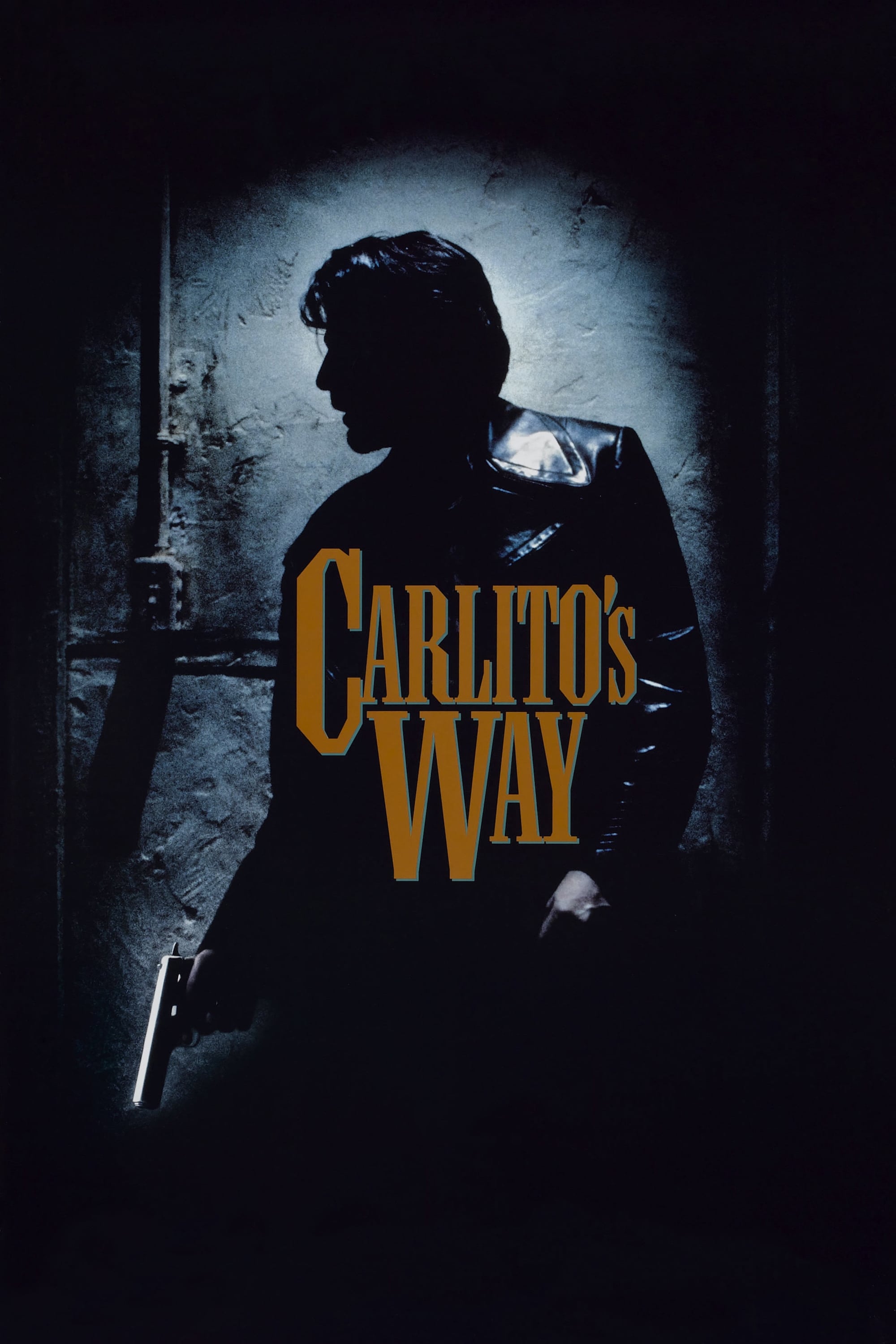
Carlito’s Way
A former drug kingpin seeks a clean start after prison, but his violent past keeps pulling him back. As betrayal and ambition close in, he fights to escape a world that refuses to let go of him.
Carlito’s Way — Plot Summary
Freedom and Second Chances
New York City, 1975. Career criminal Carlito Brigante is freed from prison after serving only five years of a thirty-year sentence. His release comes through a legal technicality that has been expertly exploited by his close friend and lawyer, Dave Kleinfeld. The technicality allows Carlito to walk free despite his serious criminal record.
Upon his release, Carlito vows to end his unlawful activities and go straight. He dreams of leaving his criminal past behind and starting a legitimate life. However, Carlito is quickly persuaded to accompany his young cousin Guajiro to what is supposed to be a straightforward drug deal at an illegal speakeasy.
The deal goes disastrously wrong. Guajiro's suppliers betray and kill him during the transaction. Carlito is forced to shoot his way out of the speakeasy to survive. In the aftermath, Carlito takes Guajiro's $30,000 from the botched deal—money that was meant for the drug purchase.
Carlito uses this $30,000 to buy a stake in a nightclub owned by Reinaldo "Saso" Saso, a gambling addict. Carlito's plan is to legitimately operate the club, save $75,000 through honest work, and then retire permanently to the Caribbean where he can live peacefully away from the criminal underworld.
New Relationships and Old Patterns
Carlito declines multiple offers for business partnerships from Benny Blanco, a hot-headed young gangster from the Bronx. Benny is ambitious and eager to expand his criminal operations, but Carlito refuses to get involved, staying true to his vow to go legitimate.
Carlito also rekindles his romance with Gail, his former girlfriend. Gail works as a ballet dancer but moonlights as a stripper to make ends meet. Their renewed relationship represents Carlito's connection to a better, more legitimate future.
Meanwhile, Dave develops a romantic interest in Steffie, a waitress at Carlito's club who is also Benny Blanco's girlfriend. This relationship creates dangerous intersections between the various characters' lives.
Benny's frustration with Carlito's repeated rejections of partnership opportunities comes to a head. He confronts Carlito at his table in the club, demanding respect and recognition. Carlito publicly humiliates Benny in front of other patrons, refusing to take the young gangster seriously. Enraged by this disrespect, Benny reacts by manhandling Steffie in the club.
Dave Kleinfeld, now extensively using alcohol and cocaine, has become unstable and impulsive. He brazenly pulls out a gun and threatens to kill Benny for mistreating Steffie. Carlito intervenes to prevent violence, de-escalating the situation. Despite being personally threatened by Benny, Carlito lets him go unharmed, showing the young gangster mercy.
This decision to spare Benny alienates Carlito from Pachanga, his friend and loyal bodyguard. Pachanga believes Carlito should have eliminated the threat when he had the opportunity, and that mercy toward enemies is dangerous weakness.
Dave's Betrayal and Prison Break
Dave reveals to Carlito that he has stolen $1 million in payoff money from his client, Anthony "Tony T" Taglialucci, a powerful Mafia boss. When Taglialucci discovers the theft, he coerces Dave into assisting with an escape plan. Dave must provide his yacht to help Taglialucci break out of the Rikers Island prison barge where he is being held.
Terrified of the consequences if the plan fails, Dave begs Carlito to help him execute the prison break. Despite having vowed to leave crime behind, Carlito reluctantly agrees to help his friend, unable to refuse Dave's desperate plea.
That night, Carlito, Dave, and Frankie Taglialucci (Tony's son) sail Dave's yacht to a floating buoy outside the prison barge where Tony Taglialucci is waiting after his escape. As they pull Taglialucci aboard the yacht, Dave suddenly shoots and kills both Tony and his son Frankie. Dave then dumps their bodies into the East River, claiming that the Taglialuccis would have killed him anyway to tie up loose ends and reclaim the stolen million dollars.
Carlito immediately recognizes the catastrophic consequences of Dave's actions. The Mafia will seek vengeance for the murders of a boss and his son. Knowing that mob retaliation is imminent and inevitable, Carlito immediately severs all ties with Dave and decides to leave New York with Gail as soon as possible.
The next day, Dave is hospitalized after a mob hitman stabs him multiple times—the first attempt at revenge for the Taglialucci murders.
Police Pressure and Hospital Visit
The police apprehend Carlito and bring him to the office of District Attorney Bill Norwalk for questioning. Carlito learns that Dave has already agreed to commit perjury—to lie under oath—if Carlito is tried again for any crimes. Dave is offering to testify against Carlito to secure a deal for himself.
Despite being threatened with charges of being an accomplice to the Taglialucci murders—which could send him back to prison for life—Carlito refuses to betray Dave. Despite Dave's willingness to sell him out, Carlito maintains loyalty to his friend.
Carlito visits Dave in the hospital. During the visit, Dave confesses to having sold Carlito out to the authorities, admitting that he agreed to perjure himself against Carlito if it would help his own legal situation.
While at the hospital, Carlito notices a suspicious man dressed in a police uniform waiting in the lobby. Recognizing potential danger, Carlito secretly unloads Dave's revolver—removing all the bullets—and leaves without telling Dave.
The man in the police uniform is Vinnie Taglialucci—Tony's other son, seeking vengeance for his murdered brother Frankie and father. After sending away the police officer who is officially guarding Dave's hospital room, Vinnie enters and shoots Dave dead with the supposedly loaded revolver. Dave dies unarmed and defenseless because Carlito removed the bullets.
Final Escape Attempt
Carlito purchases train tickets to Miami for himself and Gail, who is now pregnant with their child. The plan is to leave New York permanently, start over in Miami, and raise their child far from Carlito's criminal past.
Before leaving, Carlito visits his nightclub one last time to retrieve the money he has been saving—his stake for the new life. However, when he arrives, he is met by a group of East Harlem Italian gangsters led by Vinnie Taglialucci. The Italians have tracked Carlito down and plan to kill him for his role in the deaths of Tony and Frankie Taglialucci.
Carlito manages to slip out through a secret exit in the club, narrowly escaping execution. The Italian gangsters pursue him through New York City's subway system and into Grand Central Terminal. A running gunfight ensues through the crowded terminal.
Carlito kills all of his pursuers except Vinnie. The police arrive and shoot Vinnie dead, eliminating the last of Carlito's immediate pursuers.
Betrayal and Death
As Carlito runs to catch the train to Miami where Gail and Pachanga are waiting for him, Benny Blanco—the young gangster Carlito publicly humiliated and then spared—ambushes him. Benny fatally shoots Carlito multiple times with a silenced pistol, executing the revenge he has been planning.
As Carlito lies dying, Pachanga admits to him that he is now working for Benny Blanco. Pachanga's earlier alienation over Carlito sparing Benny led him to switch loyalties to the younger, more ruthless gangster. However, Benny shoots Pachanga as well, eliminating the witness to his murder of Carlito.
Carlito, bleeding and dying, hands the money he saved to a tearful Gail. He tells her to escape with their unborn child and start the new life they had planned—a life he will never live to see.
As Carlito dies on the platform, he stares at a billboard advertisement featuring a Caribbean beach and a beautiful woman. In his dying vision, the billboard comes to life in his mind. The woman in the advertisement transforms into Gail and begins dancing—the Caribbean retirement dream he worked toward but never achieved becoming his final hallucination as he bleeds to death.
Carlito’s Way — Ending Explained
The ending demonstrates that Carlito's attempts to escape his criminal past were doomed because his fundamental character—loyalty to dangerous friends, mercy toward enemies, and honor among criminals—made him incapable of the ruthlessness required to survive in or successfully leave the underworld. His decision to spare Benny despite the threat, help Dave despite the danger, and remain loyal despite betrayals created the circumstances that killed him.
Benny's execution of Carlito validates Pachanga's earlier warning that showing mercy to ambitious young criminals is suicidal weakness, with Carlito's compassion allowing Benny to survive long enough to plan and execute his revenge. The film suggests that in criminal worlds, honor and mercy are liabilities rather than virtues, and that Carlito's old-school code of conduct was incompatible with the more vicious younger generation represented by Benny.
Pachanga's betrayal and subsequent death demonstrates that loyalty in criminal organizations is transactional and based on perceived strength rather than friendship or history, with Pachanga abandoning Carlito for Benny because the younger gangster represented the future while Carlito represented outdated values. Benny's murder of Pachanga immediately after using him shows that the new generation discards even useful allies casually.
Dave's perjury offer and subsequent death illustrate how addiction and desperation destroy even educated, privileged criminals, with his cocaine and alcohol abuse leading to increasingly reckless decisions that killed him and endangered Carlito. Carlito's inability to cut ties with Dave despite obvious danger demonstrates how emotional attachments override survival instincts.
The dying vision of the Caribbean billboard coming to life represents Carlito's dream of legitimacy and escape remaining forever out of reach, with the paradise he worked toward existing only in his final hallucination. Gail's transformation into the billboard woman suggests that his idealized future with her was always fantasy rather than achievable reality, and that criminals cannot successfully retire to paradise.
Carlito’s Way — FAQ
Is Carlito's Way based on a true story?
No, the film is based on two novels by Judge Edwin Torres: "Carlito's Way" (1975) and "After Hours" (1979). Torres, a New York State Supreme Court Justice, drew on his experiences in the criminal justice system to create the fictional character of Carlito Brigante, though the specific events are not based on real people or incidents.
Why does Carlito unload Dave's gun in the hospital?
Carlito recognizes Vinnie Taglialucci disguised as a police officer and understands that Vinnie has come to kill Dave. By unloading Dave's gun, Carlito ensures that Dave cannot shoot Vinnie, which would bring additional mob retaliation and potentially endanger Carlito further. The action suggests Carlito has already written Dave off as dead and is protecting himself rather than his friend, though he doesn't directly facilitate the murder.
Could Carlito have actually escaped if he hadn't helped Dave?
The film suggests Carlito's escape was always unlikely because his fundamental character prevented him from making the necessary ruthless decisions. Even without Dave's disaster, Carlito's mercy toward Benny created the threat that ultimately killed him. His loyalty, honor, and inability to cut ties with his past—both people and patterns—made successful retirement nearly impossible.
What is the significance of Pachanga's betrayal?
Pachanga's switch to working for Benny represents the generational shift in organized crime from Carlito's old-school honor-based code to Benny's ruthless opportunism. Pachanga's betrayal stems from Carlito sparing Benny—Pachanga recognized that Carlito's mercy was weakness and that aligning with the more vicious Benny offered better survival prospects. His immediate death at Benny's hands shows that the new generation values nobody.