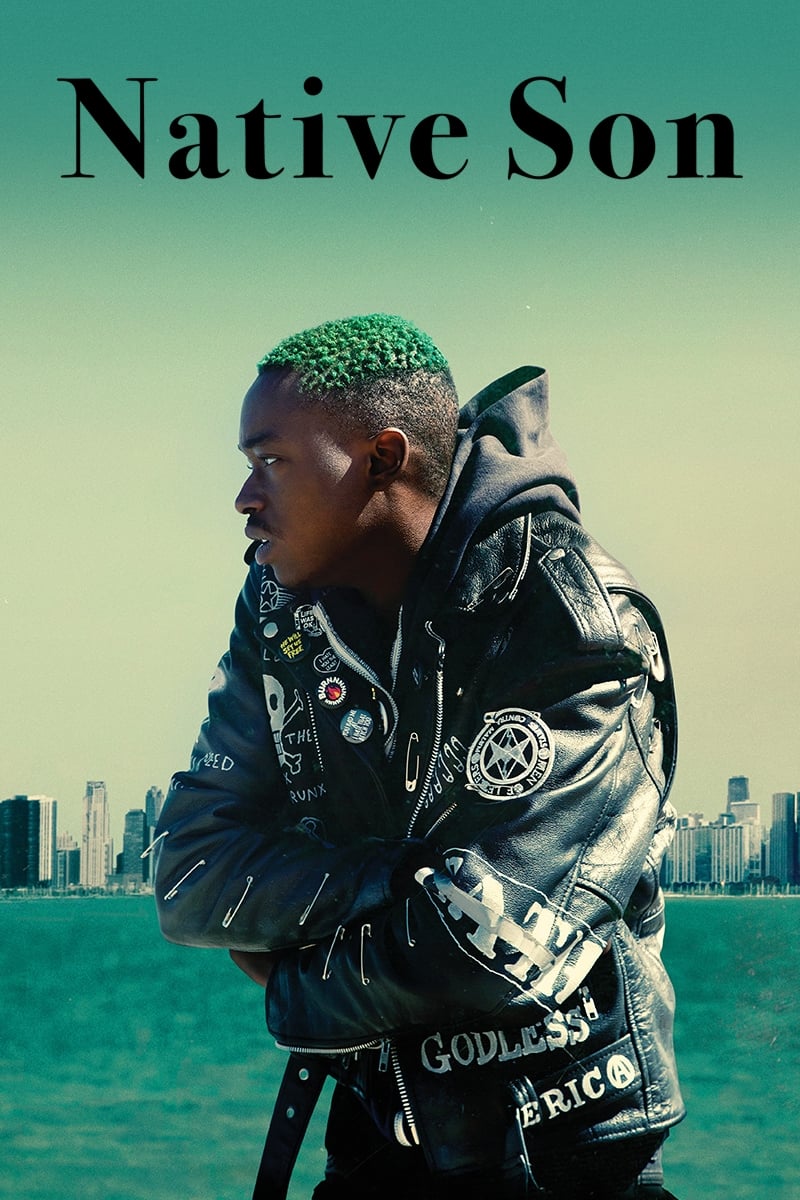
Native Son
Young Black chauffeur accidentally smothers wealthy white employer's daughter while trying to quiet her intoxicated behavior, cremates body in panic before fleeing when discovered, ultimately shot dead by police who mistake his hand movement for drawing weapon during confrontation.
Native Son — Plot Summary
Opportunity and Choice
Chicago. Bigger Thomas, a young African-American man, lives with his family in poverty. His daily existence is defined by limited opportunities and systemic racism that restricts his future prospects. One day, Bigger receives a rare opportunity: an interview for a position as the live-in chauffeur for Henry Dalton, a wealthy white businessman, and his family.
Bigger's friend Jack presents an alternative path. He wants Bigger to participate in a robbery he has planned, offering quick money through crime rather than the uncertain promise of legitimate employment. Bigger faces a choice between these two options, both problematic in their own ways—one requiring him to serve a wealthy white family in a subservient role, the other requiring him to become a criminal.
Bigger's girlfriend Bessie convinces him to take the interview rather than participate in the robbery. She sees the chauffeur position as a safer, more stable option despite the indignities it might involve. Bigger follows her advice and attends the interview.
The interview with Mr. Dalton proceeds successfully. Bigger presents himself appropriately and secures the position. He is introduced to Mrs. Dalton and to Mary Dalton, Mr. Dalton's daughter. Mary is characterized as radical in her politics, holding progressive views that distinguish her from her wealthy capitalist father.
New Connections
That evening, Bigger's first assignment is driving Mary to a political meeting. The meeting is led by Jan Erlone, Mary's boyfriend, who espouses leftist politics. After the meeting concludes, Jan and Mary invite Bigger to join them at a local club that Bigger frequents with his friends. The invitation crosses typical racial and class boundaries—wealthy white employers do not typically socialize with their Black chauffeurs in 1940s Chicago.
At the club, the three develop what appears to be genuine friendship. Jan and Mary treat Bigger with an informality and apparent equality that he has not experienced from white people before. However, their progressive politics and attempts at friendliness also contain elements of condescension and naivety about racial dynamics.
As Bigger grows closer to Jan and Mary, his relationship with Jack deteriorates significantly. Bigger had promised to participate in Jack's planned robbery but failed to appear because of his new employment. Without Bigger's participation, Jack was forced to abandon the robbery entirely. Jack confronts Bigger angrily, accusing him of succumbing to the exact racial stereotypes that Bigger himself had previously shown disdain for—becoming the subservient, compliant Black man serving wealthy whites.
Bigger attends an orchestra performance with Mary and Jan, experiencing cultural events previously inaccessible to him. When he returns to his room afterward, he discovers an expensive album he had mentioned wanting. Mary has purchased it as a gift, a gesture that seems kind but also highlights the wealth disparity between them. In gratitude, Bigger agrees to obtain drugs for Mary and Jan to use at an upcoming party.
The Accident
At the party, Jan discovers Mary making out with another man. They argue about her infidelity, creating tension that disrupts the evening. Bigger drives Mary home afterward and goes to his room, intending to end the night.
However, Mary, experiencing strong side effects from the drugs Bigger provided, begins dancing around outside the Dalton home half-dressed and shouting. Bigger recognizes the danger immediately—if Mary's parents discover her in this intoxicated, undressed state, he will be blamed and fired, possibly worse. Despite his low position, he would be held responsible for their daughter's condition.
Bigger attempts to help Mary to her room quietly. Mrs. Dalton, awakened by the noise, begins calling out to her daughter. Bigger, desperate to prevent Mary from responding and revealing the situation, attempts to calm her. When Mary continues making noise, Bigger holds a pillow over her face to muffle the sounds.
After Mrs. Dalton returns to her bedroom, Bigger removes the pillow and discovers with horror that he has accidentally smothered Mary to death. The drugs, her intoxication, and the pillow's pressure have killed her. Panic sets in as Bigger confronts the reality that a Black man will be immediately blamed for a white woman's death regardless of circumstances or intent.
Bigger drags Mary's body to the furnace room and cremates it, destroying the evidence of what happened and hoping to make her disappearance appear mysterious rather than criminal.
Investigation
The next day, two private detectives hired by Mr. Dalton arrive to investigate Mary's disappearance. They interview Bigger about when he last saw her and what happened the previous night. Bigger maintains his composure and provides answers designed to deflect suspicion.
Initially, Jan becomes the prime suspect in Mary's disappearance. As her boyfriend with radical political views, and as someone who was with her the night she vanished, Jan draws immediate suspicion from both the detectives and Mr. Dalton. The investigation focuses on Jan while Bigger remains peripheral.
However, another member of Mr. Dalton's household staff discovers a piece of Mary's jewelry in the furnace while cleaning. The discovery shifts the investigation dramatically. The jewelry indicates Mary's body was burned, and Bigger's access to the furnace makes him an obvious suspect.
Police issue a warrant for Bigger's arrest. Rather than surrendering, Bigger goes into hiding, understanding that as a Black man accused of killing a white woman, he faces certain conviction and likely execution regardless of the accidental nature of her death.
Fugitive
While hiding, Bigger secretly meets with Jan. Despite being wrongly suspected himself and having his relationship with Mary destroyed, Jan urges Bigger to turn himself in to authorities. Jan seems to believe that the justice system will treat Bigger fairly if he explains what happened—a naïve view that fails to account for racial realities.
Bessie, who has been hiding Bigger and helping him evade police, also pleads with him to surrender. She fears the consequences of continuing to harbor a fugitive and believes turning himself in offers Bigger's only chance at survival, however slim.
Bigger rejects both Jan's and Bessie's advice. Instead, he convinces Bessie to run away with him. They flee to an abandoned building where they plan to hide until they can figure out their next move. They spend the night in the derelict structure.
Final Confrontation
The next morning, Bessie and Bigger have an intense argument. During their confrontation, Bigger indirectly confesses to murdering Mary, revealing the truth about what happened that night. Bessie is horrified by the confession.
The argument escalates further. In a moment of rage and desperation, Bigger begins strangling Bessie. His hands close around her throat as he attempts to kill the one person who knows the full truth. However, Bigger comes to his senses before completing the act and stops himself. He releases Bessie, who runs away in terror, fleeing both Bigger and the situation.
Police have been alerted to Bigger's location by passersby who spotted him looking out a window of the abandoned building. Officers surround the structure and confront Bigger inside. Bigger is positioned with his back turned to police, his hands in his jacket pockets.
When ordered to turn around, Bigger complies. As he turns, he begins to remove his hands from his pockets. The police, assuming he is drawing a weapon, open fire. They shoot Bigger multiple times, killing him.
The shooting is based on mistaken belief—Bigger was not armed and had no gun in his hand. The police killed him based on assumption and fear, providing a final illustration of how racial prejudice and systemic racism determined Bigger's fate from the beginning, making his death almost inevitable regardless of his choices or actions.
Native Son — Ending Explained
The ending of "Native Son" represents the tragic inevitability of Bigger's destruction by a racist system that offered him no viable path to survival. His death at police hands, shot while unarmed based on officers' mistaken assumption he held a weapon, demonstrates how racial prejudice creates self-fulfilling prophecies—police expected a dangerous Black criminal and therefore saw one, regardless of reality.
Bigger's near-murder of Bessie reveals how systemic oppression corrupts its victims. The violence directed at Bigger throughout his life manifests in his own violent impulses toward the person trying to help him. He almost recreates the cycle of violence that has defined his existence, stopped only by a moment of clarity. Bessie's escape represents the few who manage to flee the immediate consequences of systemic racism, though her future remains uncertain.
The accidental nature of Mary's death contrasts sharply with the deliberate nature of Bigger's killing. Mary died through tragic accident compounded by Bigger's panic; Bigger died through deliberate police action based on racial assumptions. The disparity illustrates how the system values white lives over Black lives—Mary's accidental death triggers massive investigation and manhunt, while Bigger's deliberate killing will likely be dismissed as justified.
Jan's naive belief that Bigger should turn himself in reflects the disconnect between progressive politics and lived racial reality. Jan means well but fundamentally misunderstands that good intentions and legal rights offer no protection to Black men accused of harming white women in 1940s America. His advice would have led to Bigger's execution through legal process rather than police shooting—different methods, same result.
The film closes on Bigger's death as inevitable tragedy rather than justice served. He was destroyed not primarily by his own choices but by a system that offered no good options, where employment meant subservience, friendship with white radicals proved dangerous, and panic over possible accusation led to actual crime. His death represents the thousands of Black lives destroyed by systemic racism that creates conditions where survival itself becomes nearly impossible.
Native Son — FAQ
Is Native Son based on a true story?
No, but the film is adapted from Richard Wright's landmark 1940 novel of the same name, which was inspired by real criminal cases and Wright's experiences with racism in Chicago. The character Bigger Thomas represents the experiences of many young Black men trapped by systemic oppression in early 20th-century America, though his specific story is fictional.
Why does Bigger accidentally kill Mary?
Bigger smothers Mary while trying to keep her quiet to avoid being discovered in her bedroom by her mother. He fears being accused of sexual assault or other crimes if found with an intoxicated, undressed white woman. The accident occurs because Bigger panics about the racist assumptions that would be made about a Black man in a white woman's bedroom, leading to the very tragedy he feared.
What does the ending say about police violence?
The ending depicts police shooting Bigger while he is unarmed, based on their assumption he was drawing a weapon. This represents broader patterns of police violence against Black Americans, where assumptions based on racial stereotypes lead to lethal force. The police mistake his hand movement for a threat because they expect a Black suspect to be armed and dangerous, regardless of actual evidence.
Why does Bigger almost strangle Bessie?
Bigger's near-murder of Bessie represents how trauma and oppression can make people violent toward those closest to them. Bessie knows the truth about Mary's death, making her both the person who could save Bigger through testimony and the person who could condemn him. His impulse to kill her reflects desperation and the way systemic violence corrupts its victims, though his decision to stop himself shows he retains humanity despite circumstances.