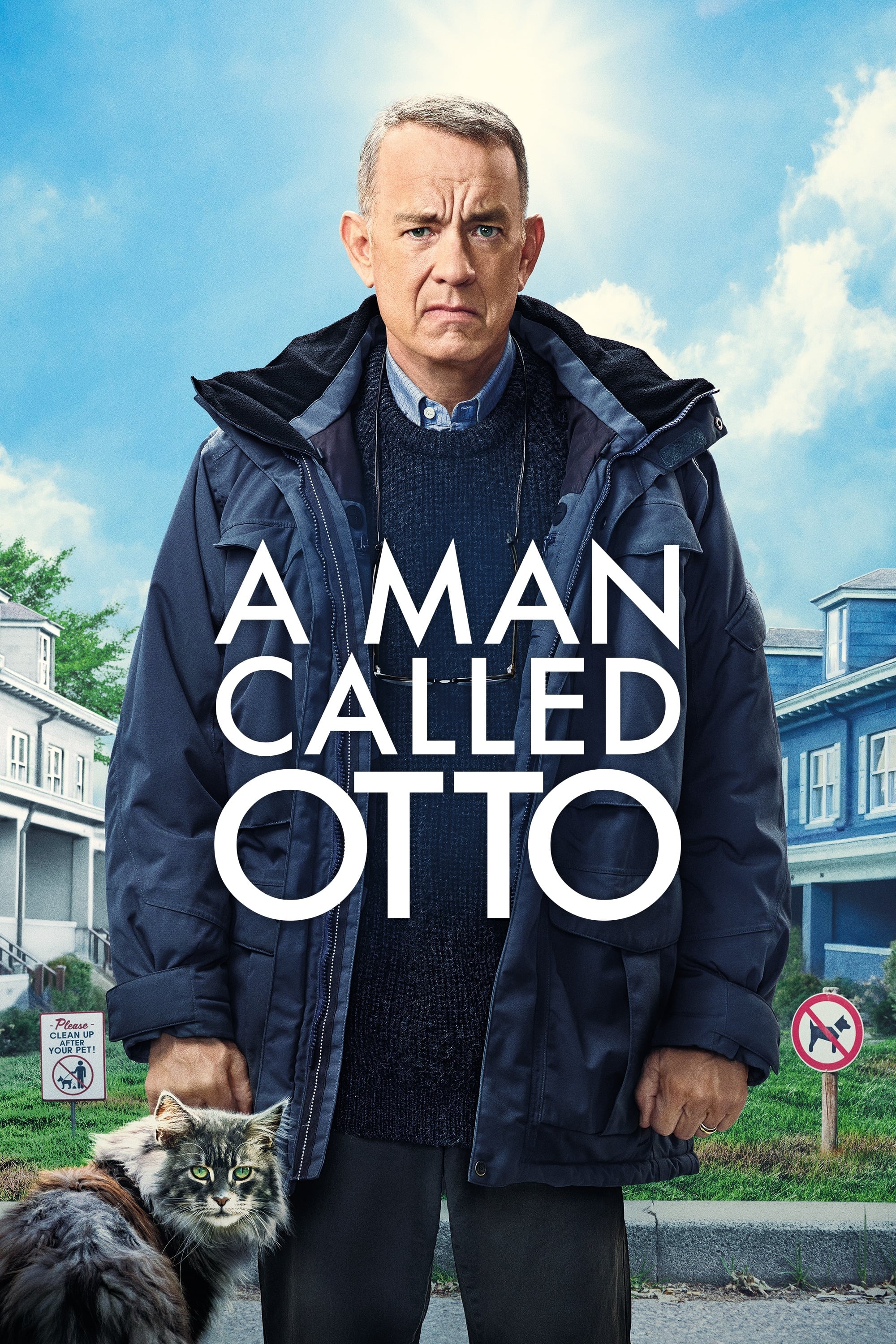
A Man Called Otto
Widowed steel plant retiree plans suicide six months after wife's death, repeatedly interrupted by pregnant neighbor seeking help, remembers courtship and bus crash that killed unborn child and paralyzed wife, saves man on railway tracks, fights predatory real estate company targeting neighbors, dies peacefully three years later bequeathing everything to neighbor family.
A Man Called Otto — Plot Summary
The Widower's Plan
Pittsburgh suburbs. Otto Anderson is a 63-year-old widower living alone in a patio home. Six months after losing his wife Sonya, a beloved schoolteacher, Otto has become a curmudgeonly, fastidious recluse who rigidly enforces neighborhood rules and criticizes everyone around him.
Otto has been pushed into retirement from his longtime job at a steel plant. Seeing no purpose in continuing to live without Sonya, Otto cancels his utilities and meticulously plans to kill himself so he can join his wife.
Otto prepares to hang himself from a ceiling hook in his home. However, his first suicide attempt is interrupted by the arrival of new neighbors: pregnant Marisol, her husband Tommy, and their young daughters Abby and Luna. The family attempts to befriend the hostile Otto, disrupting his suicide plan.
When Otto resumes his attempted suicide after the family leaves, the noose pulls the hook completely out of the ceiling, causing the attempt to fail.
Memories of Sonya
Otto visits Sonya's grave, where memories flood back. As a young man, Otto attempted to enlist in the army but failed his military medical examination due to hypertrophic cardiomyopathy—an enlarged heart condition that disqualified him from service.
While waiting on a train platform to return home after his rejection, Otto saw a beautiful young woman named Sonya drop a book. He picked it up and followed her onto a train going in the opposite direction from his intended destination. Otto returned the book to Sonya, who took an immediate liking to the awkward but earnest young man.
Sonya gave Otto money to buy a proper ticket for the train he had impulsively boarded. When Otto received his change, he got a 1964 silver quarter, which Sonya prompted him to keep as a memento of their meeting.
Community and Interruptions
Otto helps his neighbor Anita with her broken radiators, despite holding a longstanding grudge against her husband Reuben, a stroke survivor who is now non-responsive and requires constant care. Otto's willingness to help Anita while maintaining hostility toward Reuben reveals his complicated relationship with the couple.
Otto attempts suicide again, this time by carbon monoxide poisoning in his garage. As he begins to lose consciousness from the fumes, he thinks back to his courtship with Sonya—their dates, conversations, and the development of their love.
However, Marisol interrupts this second suicide attempt by frantically seeking help after Tommy breaks his leg falling from a ladder while trying to help with Otto's property. Otto reluctantly drives Marisol and the children to the hospital, abandoning his suicide plan.
At the hospital, Otto assaults a clown who takes his cherished 1964 silver quarter during a magic trick. The quarter—his keepsake from first meeting Sonya—is too precious to lose, and Otto's violent reaction reveals how deeply he treasures anything connected to his wife.
The Railway Hero
While waiting on a railway platform and planning another suicide attempt, Otto remembers his graduation from engineering school. At that milestone, he asked Sonya to marry him, and she accepted.
As a train approaches the platform, an older man suddenly faints and falls onto the tracks. Rather than allowing the man to die, Otto jumps down and saves him. Another passenger pulls both Otto and the rescued man to safety at the last second before the train arrives.
The rescue is filmed by numerous onlookers who prioritize recording the incident on their phone cameras rather than actually assisting with the rescue—a moment that highlights modern society's detachment and performative compassion.
A stray cat begins following Otto and takes a liking to him. Despite his curmudgeonly nature, Otto reluctantly adopts the cat, accepting the responsibility of caring for another living being.
Otto confronts a teenager named Malcolm for delivering unwanted advertising circulars to his door. However, Malcolm recognizes Otto as his former teacher's husband. Malcolm describes how Sonya supported him as a transgender student, showing Otto that his wife's kindness and acceptance had profound impacts on young people he knew nothing about.
Driving Lessons and Friendship
Annoyed by Marisol's inability to drive and her dependence on others for transportation, Otto begins giving her driving lessons. Despite his gruff exterior, he patiently teaches her.
Otto and Marisol visit Sonya's favorite bakery. During the visit, Otto explains that Anita and Sonya were best friends for years. However, Otto and Reuben grew apart over petty rivalries and trivial disagreements—particularly brand loyalties to different car manufacturers. Otto stubbornly preferred Chevrolet while Reuben insisted on Ford vehicles.
The final straw in their friendship came when Reuben bought a Toyota—betraying both American brands. This was followed by what Otto considers Reuben's "coup": using political maneuvering to replace Otto as chairman of the neighborhood association, a position Otto took very seriously.
Otto babysits Abby and Luna while Marisol and Tommy spend a night out together, demonstrating growing trust between Otto and the family. He also befriends Malcolm, helping to fix the teenager's bicycle and showing unexpected mechanical skill and patience.
Viral Fame and Loss
Otto actively dodges Sharie Kenzie, a social media journalist, after the video of his railway rescue goes viral online. Otto has no interest in attention or being celebrated as a hero.
Unable to come to terms with Sonya's death and feeling increasingly overwhelmed by unwanted social connections, Otto lashes out at Marisol. He also angrily confronts an agent from Dye & Merika, a real estate company that is attempting to buy up properties in the neighborhood.
Otto prepares his fourth suicide attempt, this time intending to use a shotgun. As he prepares, he remembers a devastating event from his past: during a romantic trip to Niagara Falls, the bus they were traveling on crashed. Sonya was pregnant at the time. The accident caused her to lose their baby and left her paralyzed from the waist down, becoming a paraplegic who would use a wheelchair for the rest of her life.
This fourth suicide attempt is interrupted by Malcolm, who has been kicked out of his home by his father after conflicts—likely related to Malcolm's transgender identity. Otto lets Malcolm stay the night, providing shelter to the teenager despite his suicide plans.
Fighting Back
Otto learns disturbing information about Dye & Merika's tactics. The real estate company is conspiring with the estranged son of Reuben and Anita, who has no relationship with his parents. They are using Anita's secret Parkinson's disease diagnosis—private medical information they obtained illegally—to justify buying the couple's house against their will and forcibly placing Reuben in Dye & Merika's nursing home.
Rather than proceeding with suicide, Otto resolves to fight the real estate company's predatory practices. He asks for Marisol's help in organizing resistance.
Otto finally opens up to Marisol about painful memories he has never shared: Sonya's lost child in the bus accident, her subsequent disability and life in a wheelchair, and his frustration with the inaccessibility of the Dye & Merika housing development that ignored disability accommodations. Otto also reveals that he was voted out as neighborhood association chairman after a heated confrontation about accessibility issues—likely with Reuben, who may have sided with developers or dismissed Otto's concerns as overreaction.
When Dye & Merika staff arrive to forcibly take Reuben to their nursing home, the neighbors band together to stop them. They physically block the company's attempts to remove Reuben from his home. Sharie Kenzie live-streams the entire incident on social media, exposing Dye & Merika's illegal access to Anita and Otto's private medical records and their predatory tactics targeting vulnerable elderly residents.
Too Big a Heart
During the confrontation, Otto collapses from his heart condition. He is rushed to the hospital. When asked to identify his next of kin, Otto names Marisol—the neighbor who has become like family to him.
At the hospital, Marisol is amused to learn the medical diagnosis: Otto's heart is literally "too big"—his hypertrophic cardiomyopathy means his heart is enlarged. The ironic diagnosis mirrors Otto's character—beneath his curmudgeon exterior, he has always had too big a heart, caring too deeply about Sonya, about accessibility, about doing things correctly.
While at the hospital, Marisol goes into labor and gives birth to a son whom she and Tommy name Marco.
Otto gives Marisol and Tommy the wooden cradle he built when Sonya was pregnant—a precious item he has kept for decades despite the painful memories it represents. He gives his beloved car to Malcolm, providing the transgender teenager with independence and mobility. Otto grows noticeably closer to all his neighbors, finally accepting the community connections he had been resisting.
Three Years Later
Three years pass. Following a snowfall, Tommy notices that Otto has not shoveled his walkway as he normally would—Otto has always been fastidious about maintaining his property and following his routines.
Tommy and Marisol enter Otto's house using keys he has given them. They find that Otto has died of heart failure in his sleep—his enlarged heart finally giving out.
They also discover a letter Otto left for Marisol. In the letter, Otto bequeaths her his home, his life savings, a new truck he purchased, and his cat. By leaving Marisol everything he owned, Otto ensures that the family who brought him back to life will be secure and cared for.
Following Otto's wishes for his funeral arrangements, the neighbors gather to remember him. Rather than the curmudgeonly recluse who attempted suicide six months earlier, they mourn a man who saved lives, fought for his community, taught driving, fixed bicycles, and became family to those around him.
A Man Called Otto — Ending Explained
The ending validates Marisol's persistent friendship with Otto despite his hostility, demonstrating that her refusal to accept his rejection saved his life and gave him three additional years of meaning and connection he would have lost to suicide. Her interruptions of his suicide attempts were not merely inconvenient but life-saving interventions that allowed Otto to rediscover purpose through community.
Otto's death from natural causes three years after planning suicide represents the film's argument that choosing life allows death to arrive with dignity and completion rather than despair and waste. His peaceful death surrounded by evidence of connection—the new truck suggesting plans for the future, the letter ensuring Marisol's security—contrasts sharply with the lonely, bitter suicide he originally planned.
The bequest of Otto's entire estate to Marisol rather than biological family acknowledges that family is defined by care and presence rather than blood relation, with Marisol becoming his next of kin through choice and love rather than legal or genetic connection. His gifts to Malcolm and the carefully planned letter demonstrate Otto's transformation from someone who saw no reason to continue living into someone actively ensuring others' futures.
The "too big heart" diagnosis provides metaphorical resolution to Otto's character—his enlarged heart that failed the army physical and eventually killed him was always literal manifestation of his capacity for deep love and intense care. His curmudgeon exterior was protection for a heart that loved Sonya so completely that her death made continued existence unbearable.
The snowfall detail suggests Otto's death came during winter, potentially around the same time of year as Sonya's death, completing a cyclical journey from suicidal grief through rediscovered purpose to natural death. His failure to shovel—previously unthinkable for the fastidious Otto—signals to neighbors who knew him that something is wrong, demonstrating how his patterns and care had become woven into community fabric.
A Man Called Otto — FAQ
Is A Man Called Otto based on a true story?
No, the film is based on the 2012 Swedish novel "A Man Called Ove" by Fredrik Backman, which was previously adapted into a 2015 Swedish film. While the characters are fictional, the novel and films explore universal themes of grief, suicide prevention, found family, and community connection that resonate with real experiences of loss and isolation among elderly widowers.
What is hypertrophic cardiomyopathy?
Hypertrophic cardiomyopathy is a condition where the heart muscle becomes abnormally thick, making it harder for the heart to pump blood. The condition can cause shortness of breath, chest pain, and heart failure. Otto's enlarged heart prevented his army service as a young man and eventually caused his death, while metaphorically representing his capacity for intense love and deep feeling.
Why does Otto finally decide not to commit suicide?
The film suggests multiple factors: Marisol's persistent interruptions forced Otto to engage with life despite his intentions; discovering Sonya's continued impact through Malcolm showed her legacy lives on; fighting Dye & Merika gave him purpose beyond grief; and gradually building community connections created reasons to continue living. The transformation wasn't a single decision but accumulated reasons that made life worth continuing.
What was the significance of the 1964 silver quarter?
The quarter was the change Otto received when buying his train ticket to follow Sonya on their first meeting—it represented the beginning of their love story and the moment his life changed direction. Sonya prompted him to keep it, making it a treasured talisman of their relationship. Otto's violent reaction when the clown took it demonstrated how desperately he clung to any physical connection to Sonya after her death.