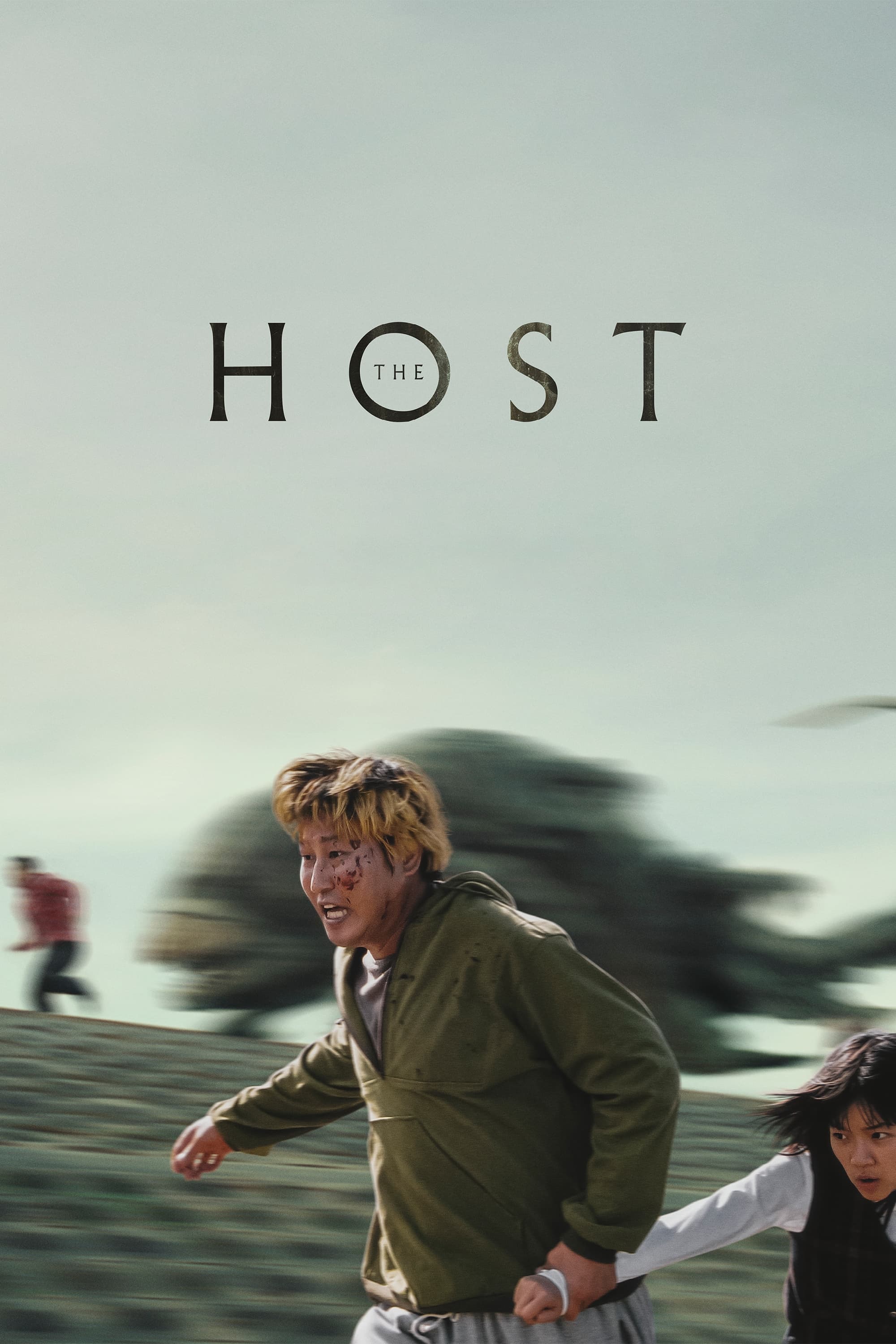
The Host
When a monstrous creature emerges from a polluted river in Seoul, panic spreads throughout the city. A determined family launches a desperate search after the creature kidnaps one of their own, blending suspense, action, and emotional storytelling.
The Host — Plot Summary
Toxic Origins
Seoul, South Korea, 2000. At a United States military mortuary facility, an American pathologist orders his Korean assistant to dump hundreds of bottles containing formaldehyde directly down a drain. The assistant protests, explaining that the chemicals will flow directly into the Han River and contaminate Seoul's water supply. The American pathologist dismisses these concerns and insists the assistant follow orders and dump the toxic chemicals regardless of environmental consequences.
The formaldehyde flows into the Han River, contaminating the waterway that runs through Seoul. Over the following years, multiple witnesses report sightings of a strange amphibious creature in and around the Han River. These sightings are dismissed or ignored by authorities.
The Park Family
Six years later, in 2006, Park Gang-du runs a small snack bar in Hangang Park alongside the Han River. Gang-du is slow-witted and socially awkward but works hard to support himself and his daughter. He lives with his elderly father Park Hee-bong, who helps run the snack bar. Gang-du's family includes his daughter Hyun-seo, a teenage girl; his sister Nam-joo, an Olympic archer whose career has stalled due to performance anxiety and choking under pressure; and his brother Nam-il, an unemployed college graduate who drinks heavily and has not successfully transitioned to adult independence.
The family represents working-class South Koreans struggling with economic insecurity, underemployment, and broken dreams while maintaining close familial bonds despite individual failures and disappointments.
Monster Attack
During a busy afternoon in Hangang Park, a large creature emerges from the Han River and storms onto the riverbank. The monster is massive, gray, and amphibious—moving rapidly on land despite its aquatic origins. It attacks people in the park, killing dozens through violent assaults, grabbing victims with its tail and mouth, and creating mass panic.
Gang-du, witnessing the attack, attempts to help an American soldier combat the monster by throwing objects at it. During the chaos, Gang-du grabs Hyun-seo's hand and runs with the fleeing crowd. However, he inadvertently lets go of her hand while trying to help another person. The monster snatches Hyun-seo, grabs her with its tail, and dives back into the Han River with her.
Following the attack, authorities organize a mass funeral for the victims killed by the monster. However, all attendees—including the Park family—are forced into mandatory quarantine. Korean government representatives and United States Forces Korea (USFK) officials announce that the creature hosts an unknown deadly virus that could trigger a pandemic. The quarantine is presented as necessary to prevent viral transmission from those who came into contact with the monster.
Phone Call
While in quarantine at a hospital, Gang-du receives an unexpected phone call from Hyun-seo. She is alive but trapped in a sewer system somewhere beneath Seoul. Hyun-seo explains her location and that the creature is keeping her in its lair. However, before she can provide precise details about her location, her mobile phone battery dies, cutting off the call.
Gang-du immediately tells hospital authorities and his family that Hyun-seo is alive and trapped in the sewers. However, authorities dismiss his claims, assuming Gang-du is delusional or in denial about his daughter's death. Even some family members doubt whether the call was real or if Gang-du misunderstood what he heard.
Realizing authorities will not search for Hyun-seo, the Park family escapes from quarantine. They purchase weapons and supplies from gangsters operating in Seoul's black market and begin searching the sewer system for Hyun-seo.
Underground Lair
Meanwhile, in the monster's sewer lair, the creature attacks and swallows two homeless boys—brothers named Se-jin and Se-joo. The monster returns to its underground nest and regurgitates both boys, along with partially digested remains of other victims. Se-jin has died from injuries or suffocation, but Se-joo survives.
Hyun-seo helps Se-joo hide inside a narrow drain pipe where the creature cannot reach them due to its size. She protects him and tries to keep him calm despite their horrifying circumstances. Hyun-seo demonstrates remarkable courage and resourcefulness, taking responsibility for protecting the younger child while trapped with the monster.
Father's Death
While searching the sewers, the Park family encounters the monster. They open fire with their purchased firearms, shooting repeatedly at the creature. However, the bullets appear to have no effect—the monster's hide is either too thick or its biology too alien for conventional weapons to cause significant injury.
During the confrontation, the creature kills Hee-bong—Gang-du's father—before running back into the sewers. The family patriarch dies, leaving Gang-du without his father's support and guidance. The death transforms the search into both rescue mission and revenge quest.
After Hee-bong's death, the army arrives and captures Gang-du. Meanwhile, Nam-il and Nam-joo escape and separate to avoid capture. The government has placed a bounty on the Park family for escaping quarantine and interfering with the official response to the creature and alleged virus.
Conspiracy Revealed
Nam-il meets an old friend nicknamed "Fat Guevara," asking for help tracking the location from which Hyun-seo's phone call originated. Fat Guevara successfully traces the call to a location near Wonhyo Bridge. However, Fat Guevara betrays Nam-il by contacting government officials to claim the bounty on the family. Nam-il escapes with the location information before authorities can capture him.
Meanwhile, Gang-du—detained by authorities—overhears American doctors discussing the supposed virus. They reveal that the virus is a complete fabrication—there is no disease, no pathogen, and no pandemic threat. The virus story was invented by American and Korean officials to distract the public from the creature's origin in U.S. military toxic dumping and to justify extreme governmental measures including martial law and chemical weapon deployment.
The doctors decide to lobotomize Gang-du to prevent him from revealing what he overheard about the virus being a hoax. The planned brain surgery would silence him permanently by destroying his cognitive function.
Escape Attempt
Inside the monster's lair, Hyun-seo attempts escape while the creature sleeps. She has created a makeshift rope by tying together clothing taken from the monster's victims—a grim but resourceful use of available materials. Hyun-seo begins climbing the rope to reach a drainage opening that leads toward freedom.
However, the creature wakes up while Hyun-seo and Se-joo are escaping. The monster swallows both children before they can reach safety. Unlike its previous regurgitations, this time the creature does not immediately vomit them back up, suggesting they may remain trapped inside its body.
Gang-du manages to escape from the hospital by taking a nurse hostage. He threatens to expose the nurse to the fabricated virus—despite knowing the virus is fake, Gang-du uses the authorities' own lie against them to create leverage for escape.
Agent Yellow
The Korean government and USFK announce a plan to release "Agent Yellow"—a highly toxic chemical weapon—throughout the Han River area. The official justification is killing the monster and containing the virus. However, the actual purpose is destroying evidence of U.S. responsibility for creating the monster through toxic dumping and eliminating the creature before international scrutiny can establish American culpability.
Gang-du locates the monster's lair using the information Nam-il obtained from Fat Guevara. When he arrives, he sees Hyun-seo's arm dangling limply from the creature's mouth. Gang-du follows the monster as it moves toward the location targeted for Agent Yellow deployment.
The creature attacks a crowd that has assembled to protest the chemical weapon's release. Many protesters oppose Agent Yellow because they recognize it will poison the river, harm citizens, and cause environmental catastrophe similar to Agent Orange's devastation during the Vietnam War.
As Agent Yellow is released from helicopters, the toxic chemical stuns the monster. Gang-du rushes forward and pulls Hyun-seo's body from the creature's mouth. He discovers that Hyun-seo has died from suffocation or injuries while inside the monster. However, Se-joo—whom Hyun-seo was clutching protectively—is unconscious but alive. Hyun-seo sacrificed herself to protect Se-joo until the end.
Final Battle
Enraged by Hyun-seo's death, Gang-du attacks the weakened creature. Nam-il, Nam-joo, and a homeless man join the assault. Working together, they set the monster ablaze using gasoline or accelerants. Gang-du impales the burning creature with a metal pole, driving it through the monster's body. The creature finally dies from the combined fire damage and impalement.
As the family mourns Hyun-seo's death, Gang-du performs CPR on Se-joo and successfully revives him. The boy survives because of Hyun-seo's protection during their time inside the monster.
Aftermath
Sometime later, Gang-du has inherited and continues operating his father's snack bar in the park. He has adopted Se-joo, raising the orphaned boy as his own son in memory of Hyun-seo's sacrifice to protect him.
While watching the river, Gang-du hears a suspicious noise and investigates, suggesting possible paranoia or that other mutated creatures may exist. However, he finds nothing.
Gang-du and Se-joo share a meal together while a television news broadcast plays in the background. The broadcast states that the entire incident—monster attack, virus scare, and Agent Yellow deployment—was the result of misinformation and exaggeration. The government's official narrative blames panic and rumor rather than acknowledging U.S. toxic dumping created the monster or that the virus was fabricated to justify chemical weapon deployment.
Gang-du and Se-joo ignore the propaganda broadcast, focusing on their meal and their new life together. The ending suggests that ordinary people continue living despite government lies and cover-ups, finding family and meaning even after tragedy.
The Host — Ending Explained
The ending reveals that institutions will sacrifice truth and justice to protect powerful interests, with the government's final broadcast blaming "misinformation" for events that actually resulted from American military pollution and subsequent cover-up. The news report's dismissal of documented events as rumor demonstrates how official narratives reshape reality to absolve the powerful of responsibility for catastrophes they caused.
Gang-du's adoption of Se-joo represents family formed through shared trauma and sacrifice rather than biology, suggesting that caregiving and protection create kinship more authentically than blood relations. Gang-du—who society views as slow-witted and incompetent—proves himself a devoted father willing to fight a monster barehanded to save children, validating that intellectual disability does not preclude courage, love, or effective parenting.
Hyun-seo's death despite the family's desperate rescue effort rejects typical heroic narratives where determination and courage guarantee happy endings, instead presenting tragedy as sometimes unavoidable regardless of effort. Her death while protecting Se-joo transforms her from victim to hero, with her sacrifice ensuring the younger child's survival even though she could not save herself.
The film's refusal to provide closure about whether other monsters exist (suggested by Gang-du investigating suspicious sounds) maintains anxiety that the underlying problem—toxic contamination of the river—was never actually addressed. Killing one mutant creature does not eliminate the environmental damage that created it, suggesting future mutations remain possible as long as pollution continues.
The family's ignoring of the propaganda broadcast while sharing a meal represents ordinary people's rejection of official narratives when personal experience contradicts them. Gang-du knows the truth because he lived it, making government lies irrelevant to his understanding even if those lies shape public perception and prevent accountability for those responsible.
The Host — FAQ
Is The Host's opening scene based on real events?
Yes. The 2000 opening scene depicting American military personnel ordering toxic chemicals dumped into the Han River is based on a real 2000 incident where a U.S. military mortician ordered formaldehyde dumped into Seoul's sewer system, which flows into the Han River. The incident caused public outrage and protests against the U.S. military presence in South Korea.
What does the monster represent symbolically?
The monster represents multiple themes: consequences of American military pollution in South Korea, corruption and cover-ups by both Korean and U.S. authorities, and the government's willingness to sacrifice citizens to protect institutional interests. The creature is literally created by American toxic dumping and figuratively embodies all the unacknowledged damage foreign military presence has caused.
Why is the virus fabricated rather than real?
The fake virus serves as narrative critique of how governments manufacture crises to justify authoritarian measures and deflect responsibility. By creating a pandemic scare, authorities shift public attention from the monster's origin (U.S. pollution) to a health threat that justifies quarantine, martial law, and chemical weapons deployment that would otherwise face public opposition.
What is Agent Yellow and why is it significant?
Agent Yellow references Agent Orange—the toxic herbicide the U.S. military used during the Vietnam War that caused massive environmental damage and health problems. By naming the chemical weapon "Agent Yellow," the film connects American military environmental destruction in South Korea to previous devastation in Vietnam, suggesting a pattern of U.S. military causing ecological catastrophe throughout Asia.