Snowpiercer
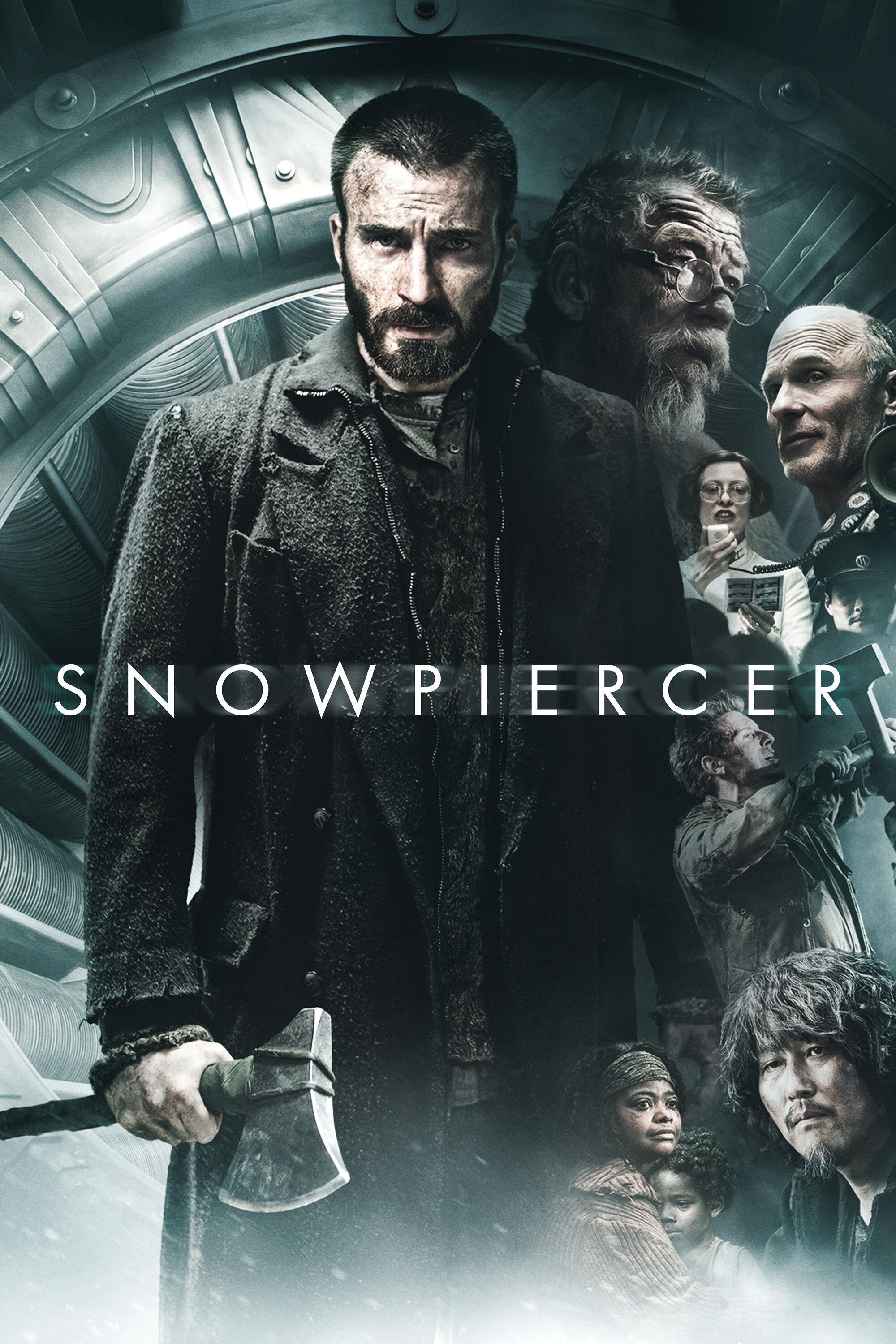
Survivors of catastrophic climate intervention causing new ice age live aboard self-sustaining train continuously circling frozen Earth for seventeen years under strict class segregation, as tail section passengers launch revolt against brutal oppression discovering horrifying secrets about train's social system and children stolen from their families while revolutionary leader confronts reclusive magnate controlling humanity's last refuge.
Snowpiercer — Plot Summary
The Frozen World
The year 2014. In a desperate attempt to stop runaway climate change, world governments implement a plan involving stratospheric aerosol injection—releasing reflective particles into the upper atmosphere to reduce global warming by reflecting sunlight back into space.
The plan catastrophically backfires. Instead of moderating Earth's temperature, the intervention triggers a runaway cooling effect that plunges the planet into a new ice age. Within a short time, the entire Earth becomes frozen, with temperatures dropping so low that virtually all life on the planet is destroyed.
Seventeen years later, in 2031, the remnants of humanity survive aboard the Snowpiercer, a massive self-sustaining train that continuously circumnavigates the frozen globe on a track that spans continents and oceans. The train was designed and is operated by Wilford, a reclusive transportation magnate who created this ark as humanity's only hope for survival.
The Snowpiercer is more than just transportation—it is a complete self-contained ecosystem with power generation, water recycling, food production, and everything necessary to sustain human life indefinitely. The train must never stop moving; if it does, its systems will freeze and everyone aboard will die.
However, the Snowpiercer is not an egalitarian refuge. The passengers are strictly segregated by class. The wealthy elite occupy the luxurious front cars, living in extravagant comfort with restaurants, aquariums, saunas, and every conceivable amenity. Meanwhile, the poor—those who forced their way onto the train at the last moment when the ice age began—are crammed into squalid, overcrowded tail compartments where they live in filth and oppression.
The tail section is controlled through brutal authoritarian measures. Armed guards maintain order, and the tail passengers are fed mysterious protein bars as their only sustenance. The guards enforce terrible punishments: children from the tail section are occasionally taken to the front cars for unknown purposes, and anyone who assaults an elite passenger faces having their arm thrust through a hole into the frozen outside air until it freezes solid, then smashed to pieces with a hammer.
The Revolt
Curtis Everett, a young man who has lived in the tail section for all seventeen years aboard the train, has been secretly planning a revolt. His mentor, an elderly leader named Gilliam who lost a limb years ago, has been urging Curtis to take action and lead the tail passengers in an uprising against their oppressors.
Curtis's second-in-command is Edgar, a young man who looks up to Curtis with absolute loyalty and devotion. Together, they finally launch their rebellion.
The revolt begins when the tail passengers attack their guards, discovering a crucial weakness: the guards' weapons have no ammunition. The guns are empty, a bluff designed to intimidate the tail section into submission. Once this deception is exposed, the tail passengers overwhelm the guards through sheer numbers.
With the initial resistance overcome, Curtis needs specialized help to progress through the train. Each section is sealed by sophisticated security doors that require expert knowledge to bypass. Curtis and his revolutionaries free Namgoong Minsoo, a security specialist who designed many of the train's door systems and has been held captive in drugged confinement.
To secure Namgoong's cooperation, Curtis offers him Kronole, an industrial waste product that has become a highly addictive drug among certain passengers. Namgoong is an addict, and access to Kronole is irresistible to him. However, Namgoong makes a condition: his daughter Yona must also be freed. Yona possesses clairvoyant abilities that allow her to sense what lies beyond the closed doors, making her invaluable to the revolution.
As the tail section mob progresses through the train, they make a horrifying discovery: the protein bars they have been eating for seventeen years are manufactured from ground-up insects—specifically, dead cockroaches processed into nutritional blocks. This revelation deepens their anger at the degradation they have suffered.
The Battle
Namgoong helps the revolutionaries advance through multiple sections, but they soon encounter a new line of defense: guards armed with melee weapons including axes, knives, and clubs, commanded by Minister Mason, a grotesque woman with false teeth who serves as Wilford's representative and enforcer.
A violent battle erupts in the confined train corridors. During the fight, Edgar is taken hostage by the guards, who threaten to kill him unless Curtis surrenders. Curtis, demonstrating the cold pragmatism necessary for revolution, makes a devastating choice: he allows Edgar to be killed rather than surrender, using the moment of distraction to capture Minister Mason.
With Mason as a hostage, Curtis forces her to order the remaining guards to stand down and surrender. The tail section mob takes control of the middle sections, holding the captured guards prisoner.
However, Curtis realizes that bringing the entire mob forward will make them vulnerable and slow. He makes a strategic decision: the bulk of the tail section will remain behind, guarding their captured prisoners and holding their newly won territory. Curtis will take only a small strike team forward to confront Wilford and take control of the engine.
Curtis's team consists of: Minister Mason as their hostage and guide, Namgoong and Yona to open security doors, Grey (a skilled fighter), and Tanya and Andrew—two parents whose young children were taken from the tail section to the front cars years ago, and who are desperate to find and rescue them.
The Luxury Cars
Curtis's small team progresses through several of the train's opulent forward cars, witnessing the shocking disparity between how the tail section lives and how the elite passengers exist.
They pass through cars containing gardens growing fresh food, aquariums with fresh fish, classrooms, and living quarters of extraordinary comfort. The contrast with the filthy, overcrowded tail section is almost incomprehensible. These passengers have lived in luxury while the tail section starved and suffered.
As they travel, Namgoong and Yona notice landmarks visible through the train's windows—recognizable mountains and geographical features from before the ice age. Namgoong makes a startling observation: the ice covering these landmarks appears to be thinner than it was on previous circumnavigations. He speculates that the ice may be slowly thawing, that Earth's temperature may be rising enough for the planet to become habitable again.
This realization gives Namgoong a dangerous idea, though he keeps it to himself for the moment.
The Schoolroom Massacre
Curtis's group reaches a schoolroom car where a teacher is conducting a lesson for young children, indoctrinating them about Wilford's greatness and the history of the Snowpiercer. The children are taught to worship Wilford as a savior and genius who rescued humanity.
During the lesson, a bald man enters the classroom carrying a large container. He announces that he has brought eggs for the children to celebrate the train's eighteenth complete circumnavigation of the Earth—eighteen years of continuous travel around the frozen globe.
However, this is a trap. While Curtis's team watches the classroom scene, the bald man leaves and travels back to where the main tail section army is holding the captured guards. Hidden beneath the eggs in his container are automatic firearms. The bald man suddenly opens fire on the tail section passengers, massacring them in a surprise attack.
The captured guards are freed by the bald man's assault, as is Franco, Minister Mason's brutal henchman who had been taken prisoner earlier. The tail section's revolution has been dealt a devastating blow—most of the tail passengers who stayed behind have been slaughtered.
Back in the classroom, the teacher suddenly reveals a weapon of her own—a gun provided by the bald man. She shoots and kills Andrew, one of the parents searching for his child. Grey immediately retaliates, shooting and killing the teacher.
Franco, now free and armed, makes his way to a video broadcast system. He transmits footage to the classroom showing his execution of Gilliam, Curtis's mentor and the spiritual leader of the tail section. Franco shoots Gilliam in cold blood, his death captured on camera for Curtis to witness.
Enraged by Gilliam's murder and the massacre of his people, Curtis executes Minister Mason, shooting her dead in retaliation. The hostage who guided them forward is now useless, and Curtis's desire for revenge overrides any strategic value she might have had.
Curtis's depleted team pushes forward, but Franco is pursuing them. In the train's narrow corridors, Franco ambushes them, killing both Grey and Tanya—two more members of Curtis's rapidly shrinking strike force. However, Curtis and Namgoong manage to fight back and seemingly kill Franco, though his body is not confirmed.
The Truth
Curtis, Namgoong, and Yona finally reach the last compartment before the sacred engine room—the heart of the train where Wilford himself resides and controls the Snowpiercer's eternal journey.
In this final car, Namgoong reveals his true plan to Curtis. The reason he demanded so much Kronole as payment for helping the revolution was not just to feed his addiction. Kronole is highly flammable and explosive. Namgoong has been collecting it to use as a bomb to blow open the train's exterior door and escape outside.
Namgoong points to the windows, showing Curtis the melting ice he and Yona have been observing. He believes that Earth's temperature has risen enough that they can now survive outside the train. His plan is to use the Kronole explosive to escape the Snowpiercer with Yona, betting their lives that the outside world is now habitable.
Curtis, shocked by this revelation, explains why he cannot abandon the train or the mission. He shares a horrific secret from the early days after the ice age, events that took place during the first months aboard the Snowpiercer.
In those early days, the tail section—hundreds of desperate people crammed into the rear cars with insufficient food—descended into chaos. With no protein bars yet being produced, the tail passengers resorted to cannibalism, eating the dead and eventually killing the weak to survive.
Curtis reveals that Edgar, the young man who was just killed and who had been Curtis's most loyal follower, was an infant during those dark times. Curtis himself killed Edgar's mother with the intention of eating her, and he was about to kill and consume baby Edgar when Gilliam intervened.
Gilliam offered his own arm as food, cutting it off and giving it to the desperate survivors. This act of self-sacrifice stopped the cannibalism, establishing Gilliam as a moral leader and saving Edgar's life. Curtis has carried the guilt of his actions for seventeen years.
Curtis explains that he needs to confront Wilford directly, to hold accountable the man whose system forced human beings into such unimaginable horrors. He wants justice for what Wilford made them become.
Before Curtis can proceed, Wilford's assistant Claude emerges from behind the sealed engine room door, inviting Curtis inside to meet Wilford personally.
Wilford's Offer
Curtis enters the engine room and finally meets Wilford face-to-face. The reclusive magnate is an elderly man who has been controlling the train for seventeen years from this command center.
What Wilford reveals completely shatters Curtis's understanding of the revolution. Wilford explains that he and Gilliam had been in secret communication for years—that they conspired together to stage Curtis's rebellion.
The purpose of the revolt was population control. The tail section had grown too large, straining the train's resources beyond sustainable levels. Wilford and Gilliam agreed that a rebellion followed by violent suppression would reduce the tail section's population to numbers the train could support indefinitely.
The entire revolution—the guards with empty guns, the advance through the train, the battles that killed so many—was orchestrated theater designed to cull the excess population. Gilliam's death was part of the plan, his murder necessary to complete Curtis's transformation from follower to leader.
With the tail section's population now reduced to sustainable levels, Wilford makes Curtis an extraordinary offer: he wants Curtis to replace him as the leader of the Snowpiercer. Wilford is old and tired, and he sees in Curtis the ruthlessness and leadership ability necessary to maintain the train's delicate social order and keep humanity alive.
Curtis, devastated by the revelation that his mentor betrayed him and that the revolution was manipulated from the beginning, appears on the verge of accepting Wilford's offer. The alternative—Namgoong's plan to escape into an uncertain outside world—seems like suicide compared to the security of the train.
The Children
Before Curtis can make his final decision, Yona suddenly overpowers Claude and rushes into the engine room. She asks Curtis desperately for a match, saying she needs fire.
In her panic, Yona pulls open a floorboard, revealing a horrifying secret hidden beneath the engine room. Timmy, Tanya's young son who was taken from the tail section years ago, has been enslaved inside the train's machinery. He has been forced to work as a living replacement part for some machine component that broke down years ago—a small child literally built into the train's systems, keeping them functioning through his forced labor.
This is what happens to the children taken from the tail section. They are used as replacement parts, their small bodies perfect for crawling into tight spaces within the machinery to maintain systems that have broken down. The Snowpiercer's self-sustaining perfection is maintained through child slavery.
Appalled and enraged by this revelation, Curtis finally understands the full evil of Wilford's system. He attacks Wilford, pummeling him, then desperately works to rescue Timmy from the machinery he's been trapped inside.
Curtis manages to free Timmy, but in the process, his own arm is caught in the same machinery that held the child. Curtis loses his arm, severed by the gears and mechanisms of the train.
As Curtis frees Timmy, Andrew's son Andy—another child taken from the tail section—crawls out of a different nook within the engine systems. Despite Curtis's pleas for the child to stay back, Andy climbs into the engine core, perhaps drawn by some mechanical need or malfunction.
Curtis, cradling the rescued Timmy with his remaining arm, understands what must be done. He gives Yona the match she requested, telling her to light the fuse on Namgoong's Kronole bomb.
Namgoong, who followed them into the final car, engages in a fight with Franco—who survived his earlier apparent death and tracked them to the engine. Namgoong kills Franco, but the struggle has damaged the door to the engine room, and it can no longer be closed or sealed.
The Avalanche
Yona lights the Kronole bomb's fuse. Curtis and Namgoong, knowing the blast will kill everyone in the immediate area, use their own bodies to shield Yona and Timmy from the explosion, placing themselves between the children and the bomb.
The Kronole detonates with massive force, blowing a hole in the train's exterior and compromising its structural integrity. The explosion is powerful enough to trigger an avalanche on the mountainside the train is traversing.
The avalanche crashes down onto the Snowpiercer, and the combination of the explosion's damage and the avalanche's force causes the train to derail. The front sections, including the engine room, are wrecked and destroyed as the train crashes off its tracks and tumbles down the mountainside.
The New World
When the avalanche settles and the wreckage stops moving, Yona and Timmy emerge from the destroyed engine car. Curtis and Namgoong are unresponsive, lying motionless in the wreckage—their sacrifice protected the children from the blast, but they appear to have died in the process.
Yona and Timmy climb out of the train wreckage into the frozen landscape. They are outside the Snowpiercer for the first time in their lives, breathing the open air of Earth.
In the distance, moving through the snow and ice, they see a polar bear. The massive predator looks healthy and alive, hunting in the frozen wilderness.
This sighting proves everything. Life exists outside the train. The polar bear survived the ice age, which means Earth's ecosystem is recovering, that animals can survive in the current climate, and that the propaganda Wilford fed the passengers—that nothing could live outside the train—was a lie designed to maintain control.
Yona and Timmy, the two youngest survivors, stand in the wreckage of the old world's last remnant, watching the polar bear that represents the possibility of a new beginning. Humanity is no longer confined to the Snowpiercer's endless circular journey. The children are free to face an uncertain but real future on a healing Earth.
Snowpiercer — Ending Explained
The ending's destruction of the train through the children's liberation demonstrates that dismantling oppressive systems requires accepting catastrophic loss, with Curtis and Namgoong's deaths positioning revolutionary change as requiring sacrifice from those who began the transformation. The train's destruction represents choosing uncertain freedom over guaranteed survival under tyranny.
The polar bear's appearance validating that life survived outside the train reveals Wilford's entire ideology was built on lies, with the perpetual motion serving control rather than necessity. The ecosystem's recovery suggests Earth healed while humanity remained trapped in Wilford's artificial system, making the train's social order a prison rather than an ark.
Yona and Timmy being the only visible survivors positions children—the train's most exploited victims used as literal machine parts—as inheritors of Earth's future, suggesting renewal requires those uncorrupted by the old system's compromises. Their youth represents hope that humanity can rebuild without replicating the class divisions that defined the Snowpiercer.
Curtis's realization that Gilliam and Wilford conspired to manipulate the revolution demonstrates that even resistance movements can be co-opted by existing power structures, with controlled opposition serving to maintain systems while creating illusion of change. Curtis's arc from revolutionary to potential successor shows how systems perpetuate by absorbing would-be reformers.
The revelation that stolen children served as replacement machine parts represents capitalism's ultimate logic—human beings literally consumed as components in self-perpetuating systems of production. Their enslavement maintaining the train's "self-sustaining" perfection exposes how technological utopias often depend on hidden exploitation.
Snowpiercer — FAQ
Is Snowpiercer based on a book?
Yes, Snowpiercer is based on the French graphic novel "Le Transperceneige" by Jacques Lob and Jean-Marc Rochette, published in 1982. Director Bong Joon-ho adapted the source material while significantly expanding the world-building, characters, and political themes. The film develops the class warfare allegory more explicitly than the original comic.
Why must the train keep moving?
The Snowpiercer's perpetual motion engine was designed by Wilford to run indefinitely, but the train must maintain constant movement to prevent its systems from freezing in Earth's extreme cold. Stopping would cause the train's heating, power generation, and life support systems to fail, killing all passengers. The eternal journey serves both practical necessity and metaphorical purpose as capitalism's endless growth requirement.
Did Curtis and Namgoong survive the explosion?
The film shows Curtis and Namgoong lying unresponsive after using their bodies to shield Yona and Timmy from the blast, strongly implying they died from the explosion's force or subsequent injuries. Their sacrifice allowed the children to survive and escape, positioning their deaths as necessary for the next generation's freedom.
How did the polar bear survive if everything else died?
The polar bear's appearance suggests Earth's ecosystem never completely died out as Wilford claimed, or that life recovered faster than his propaganda admitted. The film implies Wilford lied about outside conditions being universally lethal to maintain control—if passengers believed survival outside was possible, they might attempt escape and undermine the train's social order.