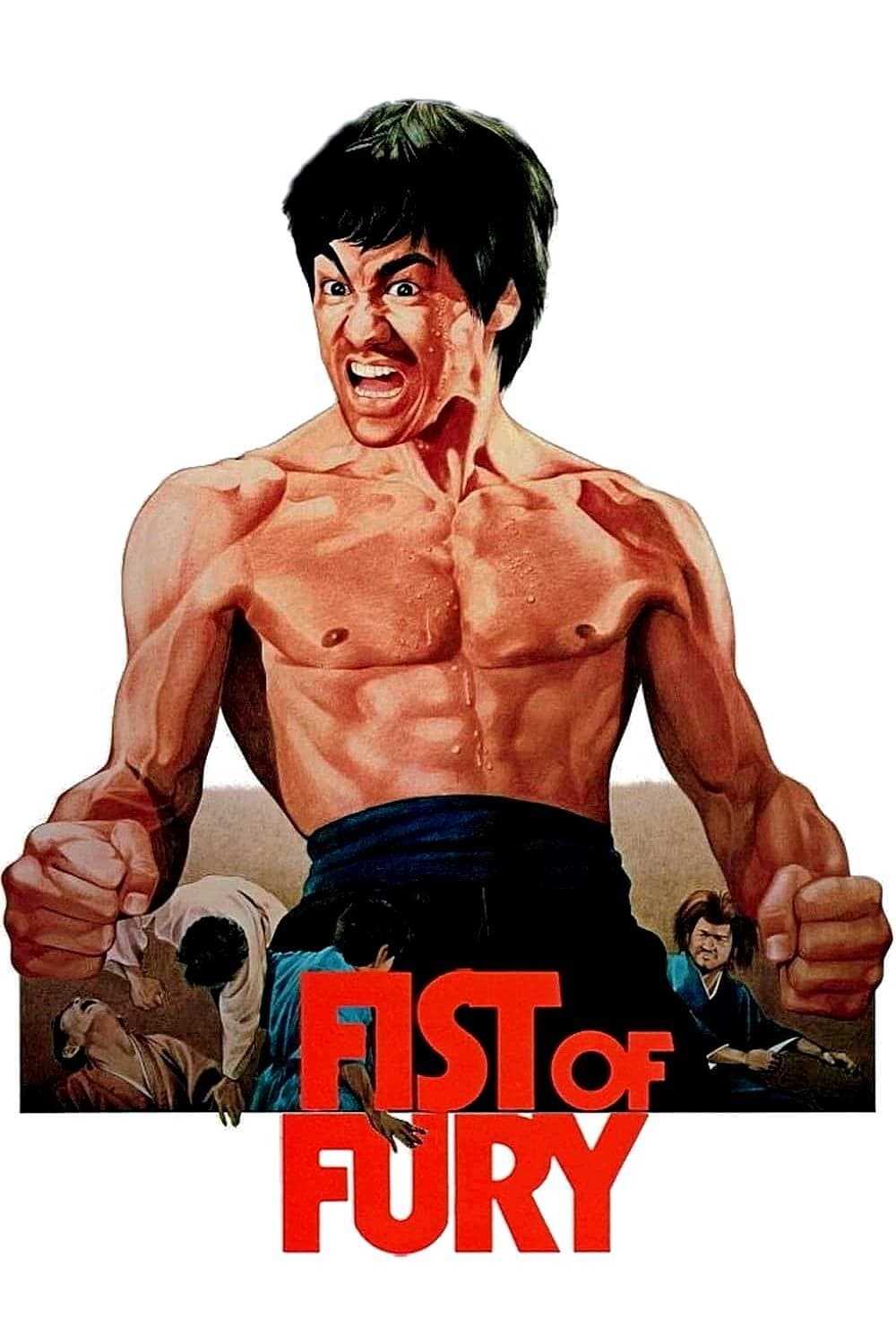
Fist of Fury (1972) (Original Title 精武門)
A martial artist returns to Shanghai to discover his master has been murdered, triggering a violent campaign of revenge against the Japanese dojo that insulted Chinese fighters and the traitors who poisoned his teacher, culminating in his defiant charge against armed forces.
Fist of Fury Film Synopsis
A martial artist returns to Shanghai to discover his master has been murdered, triggering a violent campaign of revenge against the Japanese dojo that insulted Chinese fighters and the traitors who poisoned his teacher, culminating in his defiant charge against armed forces.



Return and Loss
Shanghai in 1908 exists under complex foreign influence, with multiple international powers maintaining territorial concessions throughout the city. Chen Zhen returns to the Jingwu School, a martial arts academy where he trained for years, anticipating a joyous reunion. He plans to marry his fiancée Yuan Li’er and celebrate with his master Huo Yuanjia and fellow students. Instead, Chen receives devastating news: Master Huo has died, reportedly from illness. The loss overwhelms Chen, who revered Huo not only as a teacher but as a father figure and moral guide.
During the funeral proceedings, members of a Japanese martial arts dojo located in Shanghai’s Hongkou District arrive uninvited. Their presence is not to pay respects but to deliberately provoke and humiliate the grieving Jingwu students. Wu En, who serves as translator and advisor for the Japanese dojo’s grandmaster Hiroshi Suzuki, targets Chen specifically. He slaps Chen across the face multiple times while the young man stands mourning his master, then taunts him to fight one of Suzuki’s protégés.
The Japanese visitors present Jingwu School with a sign bearing the insulting phrase “Sick Man of East Asia.” The message is designed to dishonor both Master Huo’s memory and Chinese martial artists generally, characterizing them as “weaklings” compared to Japanese fighters. One of Suzuki’s protégés increases the provocation by challenging any Jingwu student to fight him, promising “I’ll eat those words if any Chinese here dare to fight and defeat me.”
Chen wants to respond to these insults with violence immediately, but Fan Junxia, the most senior student remaining at Jingwu School, physically prevents him from retaliating. Fan recognizes that fighting during the funeral would dishonor Master Huo’s memory and potentially bring dangerous consequences to the school.
Retaliation
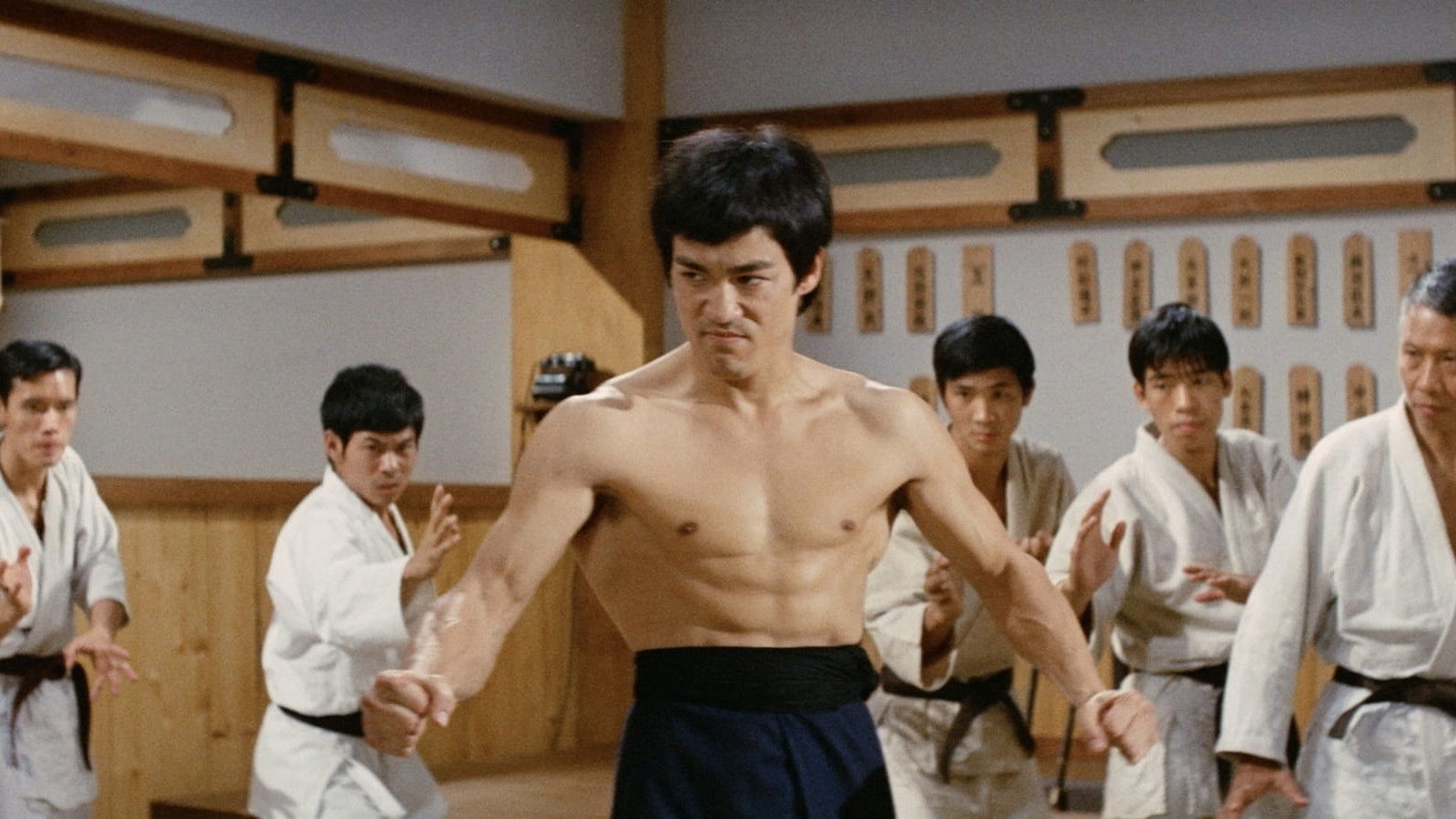
Shortly after the funeral, Chen can no longer contain his rage over the insults. He goes alone to the Hongkou dojo to return the offensive sign. His arrival triggers immediate confrontation. Chen fights the Japanese students, defeating them systematically despite being outnumbered. His martial arts skills prove superior to theirs, and he progresses through their ranks until even their sensei falls to his techniques.
After establishing complete dominance, Chen smashes the glass protecting the insulting sign. He forces the students who taunted him at the funeral to literally chew and swallow the paper bearing the words “Sick Man of East Asia,” making them physically eat their words as they had promised.
Later, Chen takes a walk to a public park, seeking to clear his mind after the violence. A Sikh guard stationed at the park entrance refuses Chen entry, pointing to a posted sign that explicitly forbids both dogs and Chinese people from entering. The discriminatory policy reflects the racial hierarchies enforced in foreign-controlled areas of Shanghai.
Chen watches as the guard permits a foreign woman to bring her pet dog into the park, demonstrating that dogs possess more access rights than Chinese citizens. A Japanese man approaches Chen and mockingly tells him that if Chen behaves like a dog, he will be allowed to enter. The suggestion that Chen should debase himself triggers explosive anger. Chen attacks the Japanese man and his companions, beating them severely.
After the fight concludes, Chen breaks the discriminatory sign. The Sikh guard blows his whistle to summon police, but Chinese citizens who witnessed the entire confrontation help Chen escape, forming a protective crowd that prevents authorities from easily identifying or capturing him.
Escalation and Discovery
The Japanese students and their master respond to Chen’s assault on their dojo by launching a retaliatory attack on Jingwu School, acting on direct orders from Suzuki. They arrive in force and cause severe damage to the school’s facilities and injure several students. Wu accompanies the attackers and delivers a warning: Jingwu School must hand over Chen Zhen to face Japanese justice, or further violence will follow.
When Chen returns to Jingwu School and sees the destruction, he realizes the consequences his actions have brought upon his fellow students. Despite the danger, the other students refuse to surrender Chen to the Japanese. They begin making plans to help him escape Shanghai entirely, recognizing that his continued presence endangers everyone associated with Jingwu School.
That night, Chen observes Tian, the school’s cook, speaking privately with Feng Guishi, the caretaker. Their secretive conversation raises Chen’s suspicions. Through investigation and confrontation, Chen discovers a horrifying truth: Master Huo was not killed by illness as officially reported. Tian poisoned him, murdering Chen’s beloved teacher.
Chen kills Tian in retaliation for this betrayal. Feng attempts to flee but Chen pursues and kills him as well, trying to extract information about why they murdered Master Huo and who ordered the assassination. After executing both traitors, Chen hangs their bodies from a lamp post as a public display.
Yuan Li’er finds Chen hiding near Master Huo’s grave. Despite the danger surrounding him and the violence he has committed, they share a passionate moment together, reaffirming their bond.
Confrontation with Authority
Suzuki pressures Inspector Lo, a Chinese police official operating under foreign authority, to arrest Chen Zhen. However, Chen successfully evades the police dragnet. While Suzuki entertains a visiting Russian associate named Petrov at the dojo, Chen infiltrates the location and kills Wu En, the translator who had humiliated him at Master Huo’s funeral. Chen hangs Wu’s body on a lamp post in the same manner as Tian and Feng, establishing a pattern of public execution.
The assassination of Wu enrages Suzuki, who recognizes that Chen is systematically eliminating everyone connected to the conspiracy against Master Huo and the insults against Chinese martial artists. Suzuki goes to the Japanese Consulate and formally reports Chen’s actions, demanding official intervention. He then dispatches his men with orders to attack Jingwu School and kill everyone inside, escalating from targeted retaliation to wholesale massacre.
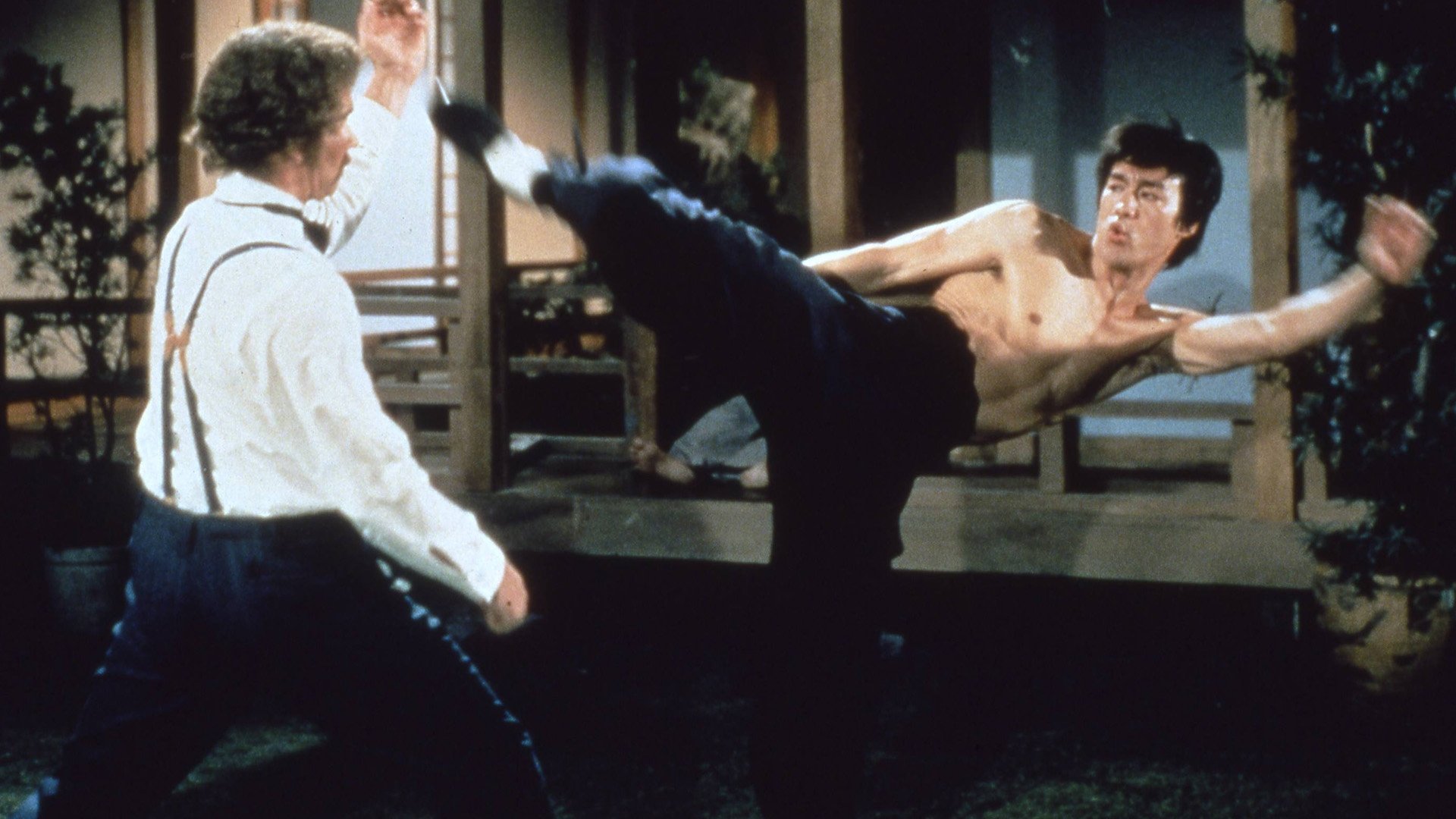
That same night, Chen launches his own assault on the Hongkou dojo. He fights his way through the building to exact final revenge on those who orchestrated the insults and violence against Jingwu School. Chen kills the students’ master, Yoshida, Petrov the Russian visitor, and finally Suzuki himself, eliminating the leadership of the Japanese dojo.
Massacre and Sacrifice
When Chen returns to Jingwu School, he discovers a scene of devastation. Most of the people from both Jingwu School and the Hongkou dojo are dead, victims of the escalating cycle of violence. However, a few Jingwu students have survived, including Yuan Li’er, Fan Junxia, and Xu. Their survival is explained by their absence during the attack—they had been searching for Chen at Master Huo’s grave site, acting on information provided by Yuan.
Inspector Lo arrives at Jingwu School with orders to arrest Chen Zhen. Chen agrees to surrender himself to Inspector Lo, recognizing that his continued resistance will only bring more death to his remaining fellow students and further damage Master Huo’s legacy. Lo tells Chen something significant: despite serving under foreign authority, Lo can be trusted because he is Chinese, suggesting some degree of sympathy for Chen’s actions and motivations.
As Chen and Inspector Lo exit Jingwu School together, they encounter a line of armed Japanese soldiers and Western policemen positioned at the outer gate. The forces are arrayed in formation, all pointing their rifles directly at Chen. The visual makes clear that this is not an arrest but an execution—Chen is meant to be killed rather than taken into custody for trial.
Faced with this firing squad and recognizing the inevitability of his death, Chen makes a final choice. Rather than submitting to execution or attempting to flee, he charges directly at the line of armed men. He launches himself into a flying kick, his body airborne and suspended in attack position as the soldiers open fire. The scene freezes with Chen mid-leap as gunshots sound, his final moment captured as an eternal image of defiance and resistance.