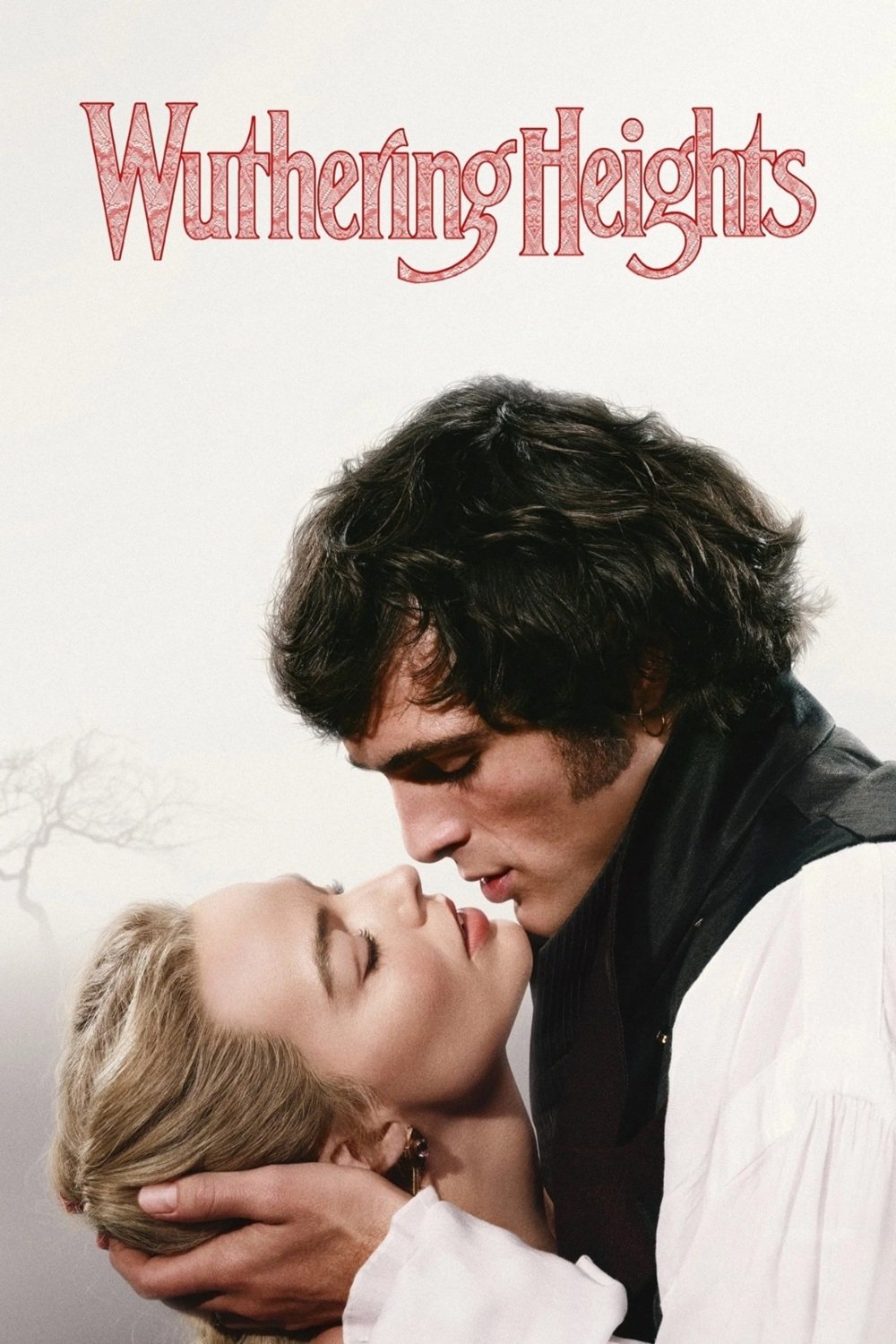
Wuthering Heights
Yorkshire woman marries wealthy neighbor despite soul-deep connection to childhood companion who overhears only degrading portion of conversation before leaving, returns years later seeking revenge through ward before resuming affair, arriving too late as woman dies from untreated miscarriage and self-starvation.
Wuthering Heights — Plot Summary
Public Execution and Arrival
Yorkshire, England, 1771. A man is publicly hanged in the town square. The condemned man's visible suffering—including a visible erection in his final moments—sends spectators into an ecstatic frenzy. Among the crowd are Catherine "Cathy" Earnshaw, a young woman from the local gentry, and her paid companion Nelly Dean, who is the illegitimate daughter of a lord.
Cathy's father, Mr. Earnshaw, is an abrasive, alcoholic man who owns Wuthering Heights, a Gothic estate situated on the windswept Yorkshire Moors. One day, Mr. Earnshaw returns from a trip to Liverpool with a young boy he rescued from the streets. He tells Cathy that the homeless child is to be her "pet"—a dehumanizing description that establishes the boy's ambiguous status in the household.
Cathy becomes fiercely protective of the boy and names him "Heathcliff" after her deceased brother. As time passes, the pair become inseparable, forming an intense bond that transcends conventional sibling or romantic relationships. After Cathy and Heathcliff are trapped in the rain one day and return home late on Mr. Earnshaw's birthday, Heathcliff assumes the blame to protect Cathy. As punishment, he receives a brutal whipping that leaves his back permanently scarred.
Decline and Social Ambition
Years pass. Wuthering Heights falls into serious disrepair as Mr. Earnshaw's alcoholism and gambling habits worsen. The estate's decline mirrors the family's social and financial deterioration.
Cathy, now a young woman, develops a plan to escape Wuthering Heights' increasingly bleak environment. Her new neighbor, Edgar Linton—a wealthy textile merchant—represents an opportunity for social elevation. Cathy plans to court Edgar with the stated intention of using his wealth and social position to help bring Heathcliff, who has become a lowly servant with long hair and an unkempt beard, into high society. However, Heathcliff is jealous of Edgar and disapproves of Cathy's plan.
While spying on Edgar and his ward Isabella—a flighty, Romeo and Juliet-obsessed young woman—Cathy sprains her ankle. Edgar takes Cathy into his home for six weeks while she heals from the injury. During her extended stay, Edgar becomes smitten with Cathy and proposes marriage. Cathy accepts his proposal. When she returns home to Wuthering Heights, she is fancily dressed in new clothes that signal her elevation into Edgar's social class. Heathcliff greets her with standoffish coldness.
Sexual Awakening and Rejection
Cathy witnesses servants Joseph and Zillah engaging in a BDSM sexual encounter in the barn. Heathcliff finds Cathy watching and keeps her silent about what she has seen. Later, Cathy goes off alone to the moors and masturbates under her skirt in solitude. Heathcliff finds her shortly after this private moment. They later share a passionate moment of physical intimacy, but when Heathcliff attempts to kiss Cathy, she rejects him.
Cathy expresses to Nelly her guilt over choosing Edgar instead of Heathcliff. During this conversation, Cathy explains that it would "degrade" her to marry the impoverished Heathcliff—marrying a servant would lower her social status unacceptably. However, Heathcliff is secretly listening and overhears Cathy's words about how marrying him would degrade her. Heartbroken and humiliated, Heathcliff leaves before hearing Cathy continue: that despite the social degradation, their souls are entwined and inseparable. Not knowing that Heathcliff overheard only the hurtful portion of her words, Cathy discovers he has left Wuthering Heights. To her profound sorrow, the heartbroken Heathcliff rides away on horseback into the sunset.
Marriage and Longing
A year passes. Cathy marries Edgar Linton and moves to Thrushcross Grange, Edgar's estate, where she lives a lavish lifestyle surrounded by wealth and comfort. Her bedroom's walls are designed to resemble her own skin—an unsettling detail suggesting both Edgar's obsessive devotion and the claustrophobic nature of her gilded cage. Isabella, Edgar's ward, arranges fine dresses for Cathy and creates a disturbing doll using Cathy's actual hair. Despite the material comforts and Edgar's adoration, Cathy longs for Heathcliff's return.
Years pass. Cathy becomes pregnant with Edgar's child. Five years after his departure, Heathcliff returns to Yorkshire. He has transformed: he is now well-groomed with short hair and has mysteriously acquired a substantial fortune during his absence. Rather than being happy to reunite with Cathy, Heathcliff is bitter and angry about her decision to marry Edgar. He considers marrying Isabella specifically to make Cathy jealous—using Isabella as an instrument of revenge.
Heathcliff purchases Wuthering Heights from the now-dying Mr. Earnshaw. Mr. Earnshaw dies soon after the sale. When Cathy visits Wuthering Heights, she kicks her father's dead body in anger—though she later relents and shows remorse. Isabella, who has become infatuated with the mysterious, wealthy Heathcliff, lashes out at Cathy when Cathy warns her that Heathcliff is not good for her. Soon after, Cathy discovers the doll Isabella made—constructed with Cathy's own hair—stabbed repeatedly and covered in blood. Despite Heathcliff's stated plans to marry Isabella for revenge, he and Cathy begin an intense sexual affair.
Revelation and Revenge
After Cathy learns that Nelly knew Heathcliff was listening when Cathy made her degrading comments about marrying him, Cathy tries to banish Nelly from her service. However, Nelly retaliates by revealing Cathy's affair to Edgar. Edgar, shocked and humiliated, forbids Cathy from seeing Heathcliff again.
Cathy reveals her pregnancy to Heathcliff during one of their sexual encounters. Heathcliff claims not to mind that the child is Edgar's, and they have sex again. Heathcliff offers to kill Edgar so that Cathy can be free, but Cathy rejects this proposal. She dismisses Heathcliff, trying to maintain boundaries.
Furious at being dismissed, Heathcliff enters into a loveless, explicitly BDSM-focused relationship with Isabella. Isabella understands the terms—that Heathcliff does not love her and is using her partly for revenge against Cathy—and consents to participate anyway. Heathcliff degrades Isabella and treats her "like a dog" during their encounters. When Nelly visits and witnesses their dynamic, she is horrified.
Decline and Death
Depressed over Heathcliff marrying Isabella, Cathy locks herself in her room and begins starving herself. Heathcliff has Isabella send love letters to Cathy, attempting to torment her. However, Nelly intercepts and burns the letters before Cathy can read them.
Cathy's condition deteriorates severely. She becomes septicemic—suffering blood poisoning—from a miscarriage that went untreated for an extended period. On what she knows may be her deathbed, Cathy tells Nelly that she forgives her for not informing Cathy that Heathcliff had overheard her hurtful words.
Nelly, finally moved to compassion, rescues Isabella from Heathcliff's house and reveals to Heathcliff that Cathy is dying. Heathcliff immediately rides out on horseback to reach Cathy. However, Heathcliff arrives too late—Cathy has already died by the time he reaches her.
Heathcliff holds Cathy's dead body and speaks to her corpse. He begs her ghost to haunt him, to drive him mad, and to never give him peace for as long as he lives. Rather than seeking comfort or release from his suffering, Heathcliff demands continued torment—wanting Cathy's presence even if it comes in the form of madness and unending grief.
The film ends with Heathcliff remembering their childhood. After the beating that left Heathcliff's back scarred, young Cathy comforted him as they lay together atop a bed. Cathy smiled as the young Heathcliff promised never to leave her—a promise he eventually broke when he overheard her degrading words, and a promise whose breaking set in motion all the tragedy that followed.
Wuthering Heights — Ending Explained
The ending validates Heathcliff's belief that separation in life should not mean separation in death, with his plea for Cathy to haunt him representing desire for eternal connection even through madness and suffering. His request that she never give him peace acknowledges that their relationship was always defined by torment rather than comfort, and that he prefers anguished connection to peaceful separation.
The final flashback to the childhood promise establishes that their tragedy began with Heathcliff breaking his vow never to leave when he fled after overhearing Cathy's degrading words, suggesting that all subsequent suffering flows from that initial abandonment. The film frames their adult choices—Cathy's marriage to Edgar, Heathcliff's revenge through Isabella, the affair, and Cathy's self-destructive decline—as attempts to repair or punish each other for that original broken promise.
Cathy's death while Heathcliff rides to reach her creates the ultimate frustration of their relationship's pattern of missed connections and thwarted reunions. The timing suggests that their souls' entwining, as Cathy described, could never manifest in life but might only be possible through death and haunting.
The film's emphasis on BDSM dynamics in multiple relationships positions suffering and pleasure as inseparable, mirroring how Cathy and Heathcliff's love manifested through jealousy, degradation, and pain rather than tenderness. The opening execution scene's sexual charge establishes that death, suffering, and ecstasy exist on a continuum in this world.
The various acts of violence against symbolic representations—Cathy kicking her father's corpse, Isabella stabbing the Cathy-doll—suggest that when direct violence against the actual source of pain is impossible, displaced violence against substitutes provides inadequate release. Heathcliff's inability to harm the living Cathy translates into psychological torture of Isabella.
Wuthering Heights — FAQ
How does this 2026 adaptation differ from previous versions?
This adaptation is explicitly sexual and violent in ways previous versions avoided, making implicit themes of masochism, dominance, and the erotics of suffering visually explicit. The BDSM relationships, masturbation scenes, and graphic depiction of the hanging execution represent a radical departure from the more restrained Victorian-era adaptations. The film explores the novel's transgressive sexuality that earlier adaptations sanitized.
Why does the film include the public hanging execution?
The opening execution establishes the film's thesis that death, suffering, and sexual ecstasy are interconnected rather than separate experiences. The crowd's "ecstatic frenzy" at witnessing suffering mirrors how Cathy and Heathcliff's relationship derives intensity from mutual torment. The executed man's erection suggests that even death can be eroticized, preparing audiences for the film's treatment of love as inseparable from pain.
Is Isabella's consent to Heathcliff's treatment portrayed as valid?
The film presents Isabella as consciously choosing to participate in a degrading BDSM dynamic with full knowledge that Heathcliff doesn't love her and is partly motivated by revenge against Cathy. Her consent is framed as informed despite the problematic power dynamics, though Nelly's horror suggests the film acknowledges ethical ambiguity in relationships where one party has ulterior motives beyond the sexual dynamic itself.
What happened to Heathcliff during his five-year absence?
The film never explains how Heathcliff acquired his fortune, maintaining the novel's ambiguity. The mysterious wealth allows Heathcliff to return as Cathy's social equal while maintaining his status as an outsider whose origins and methods remain suspect and unknowable