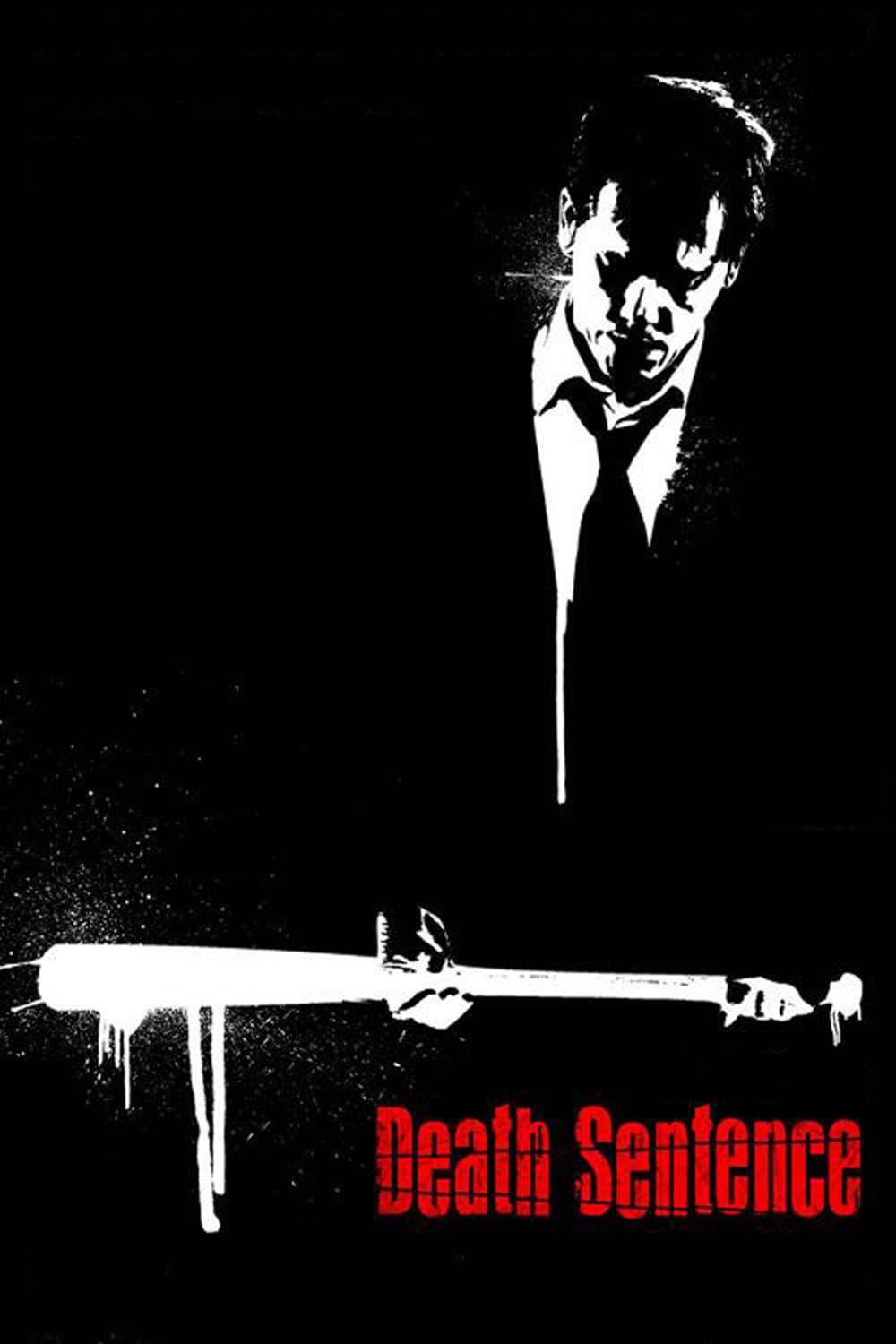
Death Sentence
After a brutal attack claims his son’s life, a desperate father abandons the law to seek his own justice. As revenge spirals out of control, he is forced to confront the darkness growing within and the cost of his choices.
Death Sentence — Plot Summary
The Attack
Columbia, South Carolina. Nick Hume is a successful businessman working as a vice president at Starfish Capital. He lives a comfortable suburban life with his wife Helen and two sons: Brendan, an athletic and charismatic teenager who plays hockey, and Lucas, the younger son who lives somewhat in his older brother's shadow.
Nick watches Brendan's hockey game with pride. On the drive home, they stop for gas at a station in a dangerous part of town. While they are there, a gang arrives to conduct what appears to be a robbery of the gas station.
The gang's ringleader kills the store clerk. Then Joe Darley, a new gang member undergoing his initiation ritual, slices Brendan's throat with a machete. The killing is Joe's initiation requirement—murdering a stranger to prove his loyalty to the gang.
Nick witnesses the attack and ambushes the fleeing thugs. During the struggle, Nick pulls off Joe's mask and sees his face clearly. Joe manages to escape but is immediately hit by a car in his panicked flight.
Nick rushes Brendan to the hospital, but his son dies from the massive throat wound. A funeral is held for Brendan. Lucas suffers severe survivor's guilt, struggling with why his brother died while he lived, and feeling inadequate compared to his deceased sibling.
Justice Denied
Nick identifies Joe Darley in a police lineup, clearly recognizing him as Brendan's killer. However, Nick learns from authorities that Joe will only receive a light sentence—possibly just a few years—because there is insufficient evidence for a murder conviction. The justice system cannot deliver adequate punishment for his son's death.
At a pre-trial hearing, Nick makes a calculated decision. He recants his identification of Joe, claiming he is no longer certain Joe was the killer. Without Nick's testimony, the prosecution has no case. Joe is released and goes free.
As soon as Joe is picked up outside the courthouse by the gang crew headed by Billy, the gang's leader, Nick begins trailing them. Nick follows the gang to Joe's apartment complex, where Joe is rewarded for completing his initiation with a prostitute provided by the gang.
That night, Nick waits for his opportunity. He catches Joe alone in the apartment building's laundry room. Nick stabs Joe to death, then disposes of the murder weapon by tossing the knife into a creek. Nick has taken justice into his own hands by executing his son's killer.
Escalation
Billy, the gang leader, wants revenge for Joe's death. Despite Nick's attempt at secrecy, he is quickly identified as Joe's killer—the gang knows who Nick is and where to find him.
The gang ambushes Nick on the streets, leading to a tense chase through a parking garage. Nick manages to evade the pursuing gang members and escapes in his car. During the chase, Nick's evasive driving causes the death of another gang member named Tommy, further escalating the cycle of violence.
In the chaos of the chase, Nick dropped his briefcase. The suitcase is delivered to Nick's office by Bodie, Billy's right-hand man and enforcer. Inside the briefcase, Bodie places a phone number.
When Nick calls the number, Billy answers. Billy reveals himself as Joe's brother, making the conflict deeply personal. Billy warns Nick that he has brought a "death sentence" upon his entire family—not just Nick himself, but everyone he loves will pay for Joe's death.
Home Invasion
Recognizing the serious threat, Nick contacts Jessica Wallis, the detective assigned to Brendan's murder case. Detective Wallis, aware that Nick has started a gang war, arranges police protection for Nick's family. She issues all-points bulletins (APBs) on Billy and his gang members, making them wanted by law enforcement.
That night, despite the police presence, the gang attacks Nick's home. They kill the police officers protecting the house, eliminating the protection before launching their assault.
The gang members subdue Nick, forcing him to watch helplessly. They then shoot both Helen and Lucas. Helen dies from her wounds. Both Nick and Lucas survive and are hospitalized, but Lucas falls into a coma from his injuries.
Transformation
After speaking briefly with Detective Wallis about the attack, Nick visits Lucas in the hospital. His younger son lies unresponsive in a coma, clinging to life. Nick apologizes to the unconscious Lucas for not being a better father, for failing to protect his family, and for the violence he has brought upon them.
Nick then escapes out the hospital window, evading any police surveillance or protection. He has decided to abandon the legal system entirely and wage his own war of extermination against the gang.
Nick seeks out Bones, a black market gun dealer. He purchases multiple firearms and ammunition from Bones. However, Bones later reveals himself to be Billy's father, creating an additional layer of complexity—Nick has unknowingly armed himself through the gang leader's own father.
Nick tracks down Heco, a junkie and low-level member of Billy's gang. Through interrogation and threats, Nick learns that the gang's headquarters is an abandoned mental hospital that they call "The Office."
Nick forces Heco to call Billy's phone number. While Billy is listening on the line, Nick executes Heco—sending Billy a message that Nick is coming for all of them and that he has become as ruthless as the gang itself.
Confrontation
Bones confronts his son Billy, revealing that he sold guns to Nick Hume. Bones chastises Billy for his recklessness in starting this war, which has now spiraled completely out of control and threatens to destroy their entire organization.
Billy's response is immediate and brutal: he kills his own father Bones, eliminating any obstacle to continuing his revenge against Nick.
Nick arrives at "The Office"—the abandoned mental hospital serving as the gang's lair. A massive shootout erupts. Nick systematically kills the remaining gang members, using his newly acquired weapons and his rage-fueled determination to eliminate everyone involved in his family's destruction.
Finally, Nick and Billy face off in the building's chapel. Both men seriously wound each other in the gunfight. Bleeding and weakened, they sit together on the same church pew.
Billy comments philosophically that through this cycle of revenge, he has succeeded in turning Nick into a vicious, cold-blooded killer—exactly like Billy himself. Nick has become the monster he set out to destroy, transformed by violence into something unrecognizable from the suburban businessman he once was.
Nick pulls out his revolver and asks Billy if he is ready to die. Billy sheds a single tear—perhaps recognition of the futility of their violence, or grief for his brother Joe and father Bones, or understanding that his own choices led inevitably to this moment. Nick ends Billy's life with a final shot.
Aftermath
Nick returns to his empty home, alone with the consequences of his actions. He watches old home movies of his family—Helen alive and smiling, both sons healthy and happy—memories of the life that violence has destroyed.
Nick awaits his inevitable arrest. He knows the police will come for him, and he makes no attempt to flee or hide.
Detective Jessica Wallis arrives at Nick's home to take him into custody. Before arresting him, she informs Nick of crucial news: Lucas has improved and will survive. Nick's younger son has emerged from his coma and will live.
Nick faces arrest and likely life imprisonment for multiple murders, but his surviving son will have a future. The cycle of revenge has ended, though the cost has been almost everything Nick once had.
Death Sentence — Ending Explained
The ending validates Nick's transformation into a killer as necessary to protect Lucas from continued gang threats while simultaneously condemning that transformation by showing Nick has destroyed himself and his family in the process of seeking revenge. His success in eliminating the gang comes at the cost of becoming the monster Billy describes, with his arrest representing consequence for abandoning civilized justice.
Billy's observation that he "turned Nick into a cold-blooded killer just like him" suggests that revenge corrupts regardless of initial justification, and that engaging in violence for any reason transforms people into perpetrators rather than remaining victims. The film presents revenge as psychologically destructive even when tactically successful.
Lucas's survival provides the only redemptive element in an otherwise tragic ending, suggesting that Nick's violence at least achieved the protective goal of eliminating threats to his remaining son. However, Lucas will grow up with his mother and brother dead, his father imprisoned, and the knowledge that revenge consumed their family entirely.
The chapel setting for the final confrontation provides ironic commentary on redemption and forgiveness—Christian values of mercy and turning the other cheek are explicitly rejected in favor of Old Testament eye-for-an-eye justice. Billy's single tear before death suggests even he recognizes the futility and waste, though too late to prevent it.
Nick's watching of home movies while awaiting arrest demonstrates his full awareness of what he has lost through revenge—the happy family in the videos no longer exists, and Nick himself is no longer the man in those recordings. His passive acceptance of arrest suggests exhaustion and recognition that he deserves punishment rather than vindication.
Death Sentence — FAQ
Is Death Sentence based on a true story?
No, the film is based on Brian Garfield's 1975 novel "Death Sentence," which was a sequel to his novel "Death Wish" (though the 2007 film is not connected to the Death Wish film series). Garfield wrote "Death Sentence" partly as a response to his own "Death Wish" being adapted into a film that glorified vigilante violence—Garfield intended "Death Sentence" as a cautionary tale about revenge's destructive consequences.
Why doesn't Nick just let the justice system handle Joe's trial?
Nick learns that due to insufficient evidence, Joe would only receive a light sentence—possibly just a few years for manslaughter rather than murder—which Nick considers inadequate punishment for his son's death. His decision to recant his testimony and kill Joe himself reflects his belief that legal justice is insufficient, though the film ultimately shows that personal revenge creates worse outcomes than accepting imperfect legal justice.
What does Billy mean when he says Nick brought a "death sentence" on his family?
Billy is using the term "death sentence" in its literal meaning—he promises to kill Nick's entire family as revenge for Joe's death. The title refers both to this threat and to the broader theme that choosing revenge is choosing death, with Nick's decision to kill Joe setting in motion events that destroy his family and himself.
Why does Bones sell guns to Nick if Billy is his son?
The film suggests that Bones operates his illegal gun business with criminal professionalism separate from family loyalty, selling to anyone regardless of personal connections. His later confrontation with Billy criticizing the gang war suggests Bones understood that violence was bad for business and that Billy's revenge obsession was reckless, though Bones enabled both sides by selling weapons to Nick and leading the gang that included Billy.